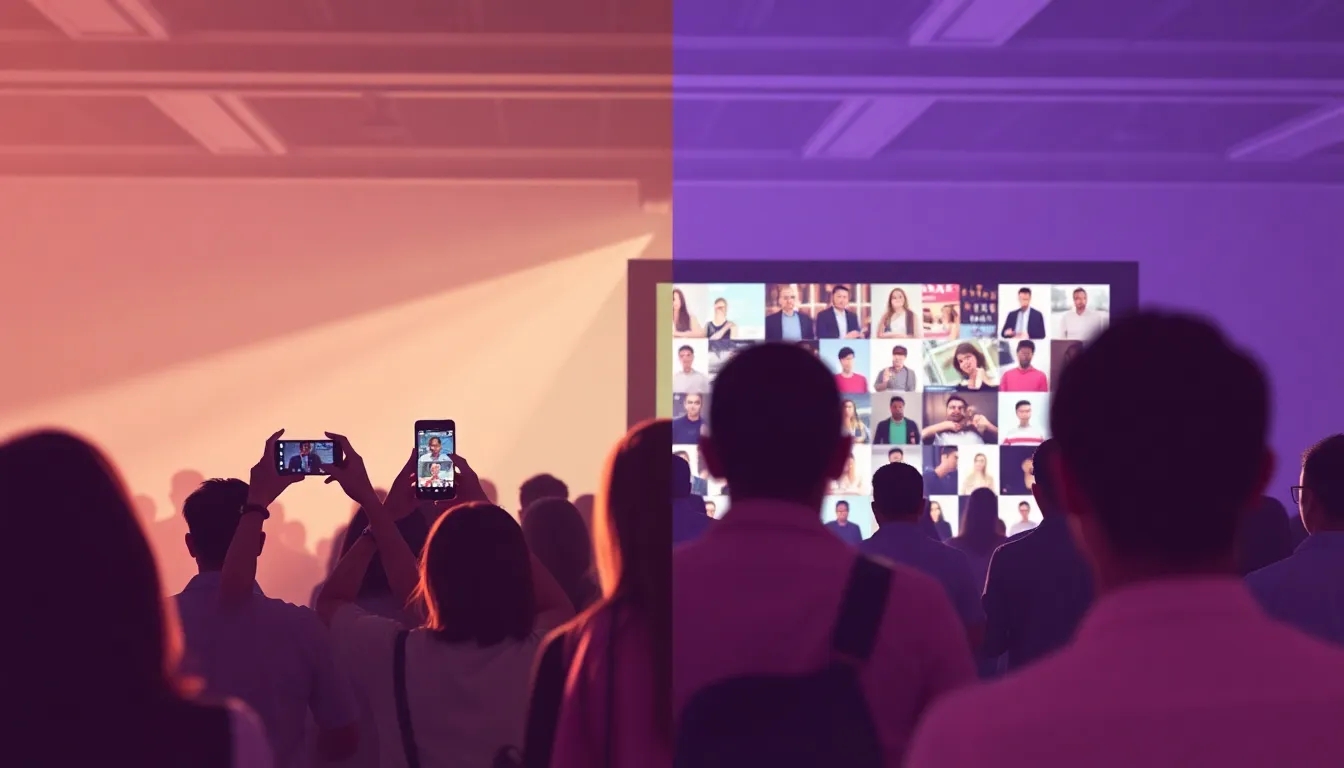
Your attendees are already creating content about your event. They're snapping selfies at registration, photographing keynote slides, recording behind-the-scenes moments, and sharing their experiences across Instagram, TikTok, LinkedIn, and Facebook. In 2026, 98% of consumers create digital or social content at experiences and events, according to recent experiential marketing research. Even more striking: 72% of event attendees post event-related content on social media, with Instagram, YouTube, and Facebook leading as the top platforms.
That massive volume of attendee-generated photos, videos, and posts represents an untapped goldmine for event organizers. Rather than letting this content scatter across the internet with inconsistent hashtags and zero strategic follow-up, forward-thinking event planners are capturing, curating, and repurposing user-generated content (UGC) into compelling marketing campaigns that drive registrations, boost sponsor value, and extend event impact for months after the last session ends.
This comprehensive guide will show you exactly how to transform attendee social posts into high-performing campaign assets—from pre-event strategy through post-event amplification.
Why User-Generated Content Outperforms Traditional Event Marketing
Before diving into tactics, it's worth understanding why attendee photos and posts are so valuable. The numbers tell a compelling story. According to 2026 experiential marketing statistics, social campaigns that incorporate user-generated content such as attendee photos and posts see a 50% lift in engagement, while UGC posts achieve a 28% higher engagement rate than standard branded content.
A 2025 study found that Instagram posts with UGC are projected to garner approximately 70% more engagement than traditional brand posts, highlighting the dramatic value of repurposing attendee photos into campaign content. Perhaps most tellingly, as of 2025, 93% of marketers who use UGC say it outperforms traditional branded content.
The investment community has taken notice of this shift. In the U.S., spending on UGC content is expected to exceed $10 billion in 2025, up 11% from $9 billion in 2024, reflecting rapid growth in budgets for creator and attendee-driven visual content that can be reused in campaigns.
Why does UGC perform so much better? Three reasons stand out:
- Authenticity: Attendee photos feel genuine and relatable in ways that polished brand imagery cannot replicate. When prospective attendees see real people experiencing your event, they can envision themselves there.
- Social proof: UGC serves as third-party validation. A photo of an attendee enthusiastically networking or learning carries more credibility than a hundred marketing claims.
- Algorithmic advantage: Social platforms prioritize content from real users over branded posts. When attendees share your event, their networks see it—extending your organic reach exponentially.
The amplification effect is significant: according to 2026 research from the American Marketing Association, attendees tell an average of 17 other people about their event experience afterward, and with 96% of Millennials sharing photos and videos online, that word-of-mouth happens at scale across digital channels.
Building a UGC-Friendly Event Environment
The foundation of any successful attendee content campaign is creating an environment where content creation happens naturally and enthusiastically. This starts long before your event doors open.
Design Instagram-Worthy Moments
Strategic "photo op" zones have become essential event infrastructure. Think beyond a simple step-and-repeat banner. Consider:
- Themed installation areas that align with your event brand and provide visual interest
- Interactive displays where attendees can engage with products, technology, or creative elements
- Statement signage with your event hashtag prominently displayed
- Branded lounges or meeting spaces with distinctive design elements
- Lighting designed specifically to make smartphone photos look great (ring lights, warm ambient lighting, avoiding harsh overhead fluorescents)
The goal is to create spaces where attendees instinctively want to capture and share their presence. When done well, these zones become content factories that require minimal prompting.
Gamify Content Creation
Passive photo opportunities are good; incentivized content creation is better. Gamification transforms casual photography into strategic engagement. Consider implementing a photo challenge where attendees earn points, badges, or prizes for posting content from designated locations throughout your venue.
Digital tools make this remarkably simple. With QR code-based engagement platforms, you can place scannable codes at photo stations, sponsor booths, session rooms, and networking lounges. When attendees scan each code and share their experience on social media with your event hashtag, they collect digital stamps and climb a live leaderboard. This approach naturally encourages attendees to visit more areas of your event, create more content, and tag your event consistently—all while having fun competing for prizes.
The beauty of this system is that it generates a steady stream of properly tagged, strategically diverse content across your entire event footprint. You can see how this works in an interactive demo that shows the attendee experience from check-in through prize redemption.
Make Sharing Frictionless
Every barrier between "great moment" and "shared post" represents lost content. Minimize friction by:
- Providing reliable, fast WiFi throughout your venue (and prominently advertising the network name and password)
- Creating a single, memorable event hashtag and displaying it everywhere—badges, signage, presentation slides, swag
- Offering phone charging stations near popular photo areas so battery anxiety doesn't limit sharing
- Developing suggested caption templates or sharing them via signage to make posting easier
- Ensuring your event has a strong visual identity that translates well to social media formats
Capturing and Aggregating Attendee Content in Real-Time
Once attendees start creating and sharing content, you need systems to capture and organize it effectively. Waiting until after your event to search hashtags manually is a recipe for missed opportunities.
Hashtag Monitoring and Social Listening
Deploy social media monitoring tools that track your official event hashtag in real-time. Platforms like Hootsuite, Sprout Social, or specialized event social aggregators can pull in tagged posts as they're published, creating a living archive of attendee content.
Don't limit yourself to just one hashtag. Monitor variations, your event name, venue tags, sponsor hashtags, and speaker names. Cast a wide net to capture the full scope of conversation.
Photo Walls and Live Social Feeds
Display aggregated attendee posts on screens throughout your event. This serves multiple purposes:
- It validates attendees who see their content featured, encouraging them to post more
- It demonstrates social proof to other attendees, showing them that sharing is the norm
- It creates additional photo opportunities (attendees photographing themselves on the big screen)
- It provides dynamic, authentic content during breaks and networking sessions
Many event platforms offer moderation features so you can approve posts before they display publicly, maintaining quality and brand safety.
Direct Capture Through Event Apps
Beyond monitoring public social posts, consider building direct content submission into your event experience. Event engagement platforms can include photo upload features where attendees submit content directly to you, often in exchange for gamification points or contest entries.
This approach gives you higher-resolution original files (rather than compressed social media versions) and often comes with implicit usage rights since attendees are submitting directly to your system. The gamification layer—where photo submissions earn stamps, points, or leaderboard position—dramatically increases participation rates compared to passive "share if you want" approaches.
Securing Rights and Permissions
Before you repurpose any attendee content in your marketing, you need proper permissions. This is both a legal requirement and a trust-building opportunity.
Proactive Terms and Permissions
Build rights management into your registration process. Include clear language in your terms of service stating that content shared with your official event hashtag or submitted through event platforms may be used in marketing materials. Make this language clear, specific, and easy to understand—not buried in legal fine print.
Many successful events use a two-tier approach: general permission granted during registration for use in event recaps and future promotion, plus individual outreach for featured placements in major campaigns or paid advertising.
Individual Outreach and Relationship Building
When you identify particularly compelling attendee content, reach out personally. A simple direct message or email saying "We loved your post from our event! Would you be comfortable with us featuring it in our next campaign? We'd of course give you credit and tag you" goes a long way.
Most attendees are flattered by the request and happy to agree. This personal touch also strengthens relationships with engaged community members who may become brand advocates, advisory board members, or influential voices in future promotions.
Credit and Attribution
Always credit content creators. Tag them when you repost their photos, include their handles in campaign materials, and acknowledge their contribution. This isn't just courteous—it's strategic. Credited creators often reshare your campaign content to their own networks, exponentially extending your reach.
Curating and Organizing Content for Campaign Use
You'll likely collect hundreds or thousands of attendee photos and posts from a successful event. Curation—the process of selecting, organizing, and categorizing the best content—is what transforms a chaotic pile of images into strategic campaign assets.
Quality Assessment Criteria
Not all UGC is campaign-ready. Develop clear criteria for selecting content:
- Technical quality: Is the image in focus, well-lit, and high enough resolution for your intended use?
- Composition: Does the framing effectively showcase the event experience, products, or key moments?
- Brand alignment: Does the content reflect your event values and brand identity?
- Diversity and representation: Does your curated selection represent the full diversity of your attendee base?
- Emotional resonance: Does the image convey energy, learning, connection, or other emotions you want associated with your event?
Thematic Organization
Organize selected content into themed collections that align with campaign objectives:
- Networking and connection: Photos of attendees interacting, exchanging ideas, or building relationships
- Learning and education: Attendees engaged with speakers, taking notes, participating in workshops
- Sponsor engagement: Interactions at sponsor booths, product demos, branded experiences
- Keynote moments: Audience reactions during major presentations, speaker highlights
- Fun and entertainment: Social events, creative activities, celebratory moments
- Venue and atmosphere: Wide shots that showcase event scale, design, and energy
This thematic organization allows you to quickly pull relevant assets when building specific campaigns—whether you're promoting next year's conference, highlighting sponsor value, or showcasing the networking opportunities at your events.
Metadata and Tagging Systems
Implement a tagging system in your digital asset management platform. Tag each piece of content with relevant attributes: event date, photographer/creator, content type, theme, featured sponsors or exhibitors, depicted activities, and usage permissions status.
Robust metadata makes content discoverable months later when you're building a campaign and need "photos of attendees networking at technology conferences" or "images featuring Sponsor X's booth activation."
Deploying UGC Across Campaign Channels
With curated, rights-cleared content organized and ready, you can deploy attendee photos and posts across multiple campaign channels to maximize impact.
Social Media Campaigns
Social platforms are the natural home for repurposed UGC. Create campaign series that showcase attendee experiences:
- "Throwback Thursday" or "Flashback Friday" posts featuring memorable moments from recent events
- Countdown campaigns for upcoming events that use past attendee photos to build excitement
- Testimonial posts pairing attendee quotes with their photos
- Story highlights organized by theme (networking, learning, entertainment) featuring attendee content
- Reels and short video compilations assembling attendee clips into highlight reels
Remember that brands using UGC report 28% higher engagement rates according to 2025 research, with visual UGC reaching up to 50% higher engagement in some cases. These aren't marginal improvements—they're campaign-changing performance lifts.
Email Marketing
Attendee photos bring authenticity and visual interest to email campaigns. Use UGC in:
- Post-event recap emails that showcase the experience through attendee eyes
- Early-bird registration campaigns for upcoming events, featuring happy attendees from previous years
- Newsletter features highlighting community members and their event experiences
- Sponsor value reports that include photos of attendee engagement at branded activations
Including real attendee faces in email creative typically outperforms stock photography or branded imagery, increasing click-through rates and conversion to registration.
Website and Landing Pages
Transform static event websites into dynamic showcases of community and experience. Create dedicated gallery pages featuring attendee content from recent events. Incorporate UGC into registration landing pages to provide social proof at the exact moment prospects are deciding whether to attend.
Interactive elements—like filterable galleries where visitors can browse by event year, theme, or activity type—increase time on site and provide compelling evidence of your event's value and energy.
Paid Advertising
UGC often outperforms traditional advertising creative. According to 2025 data, 93% of marketers who use UGC say it outperforms traditional branded content. Test attendee photos in your paid social campaigns, display advertising, and even video pre-roll.
The authentic, unpolished aesthetic of attendee content often stops the scroll more effectively than perfectly composed branded imagery. Just ensure you have explicit permission for paid usage, as organic social sharing rights and paid advertising rights are legally distinct.
Sales and Sponsorship Materials
Attendee content is invaluable in sales contexts. When pitching sponsors or exhibitors, nothing demonstrates value like photos of engaged attendees crowding booth spaces, interacting with products, or sharing branded experiences on social media.
Create sponsor-specific content packages showing exactly how attendees engaged with similar sponsors at past events. Include metrics on social reach, hashtag usage, and content volume to quantify the exposure value sponsors receive.
Measuring Impact and Optimizing Future Campaigns
To continuously improve your UGC strategy, establish clear metrics and tracking mechanisms.
Content Volume Metrics
Track basic volume indicators:
- Total number of posts with your event hashtag
- Number of unique content creators
- Content type breakdown (photos, videos, stories, etc.)
- Peak posting times and days
- Geographic distribution of posters
These baseline metrics help you understand content generation patterns and identify opportunities to increase volume—for example, if posting drops in the afternoon, that might signal a need for better afternoon photo opportunities or gamification prompts.
Engagement and Reach Metrics
Measure how your repurposed UGC performs:
- Engagement rate on UGC-based posts vs. branded content
- Reach and impressions generated by attendee posts (using hashtag analytics)
- Click-through rates on emails featuring UGC vs. standard creative
- Conversion rates on landing pages with and without attendee content
- Paid advertising performance metrics comparing UGC creative to branded assets
Given that UGC campaigns consistently show 28-50% higher engagement according to 2026 research, you should see meaningful performance improvements. If you don't, examine your curation process—you may be selecting content that doesn't resonate with your target audience.
Campaign Attribution
When possible, track registration or sales attribution to specific UGC campaigns. Use UTM parameters, unique promo codes, or campaign-specific landing pages to understand which content drives concrete business results.
This attribution data helps you identify which types of attendee content are most persuasive to prospects—whether that's networking photos, learning moments, entertainment experiences, or specific venue/location content.
Sustaining Your UGC Engine Year-Round
The most sophisticated event organizations don't treat UGC as a one-time harvest at each event. They build year-round content ecosystems that continuously generate, capture, and deploy attendee content.
Community Engagement Between Events
Encourage ongoing content creation between events through:
- Online community platforms where members share relevant industry content
- Photo contests or challenges tied to upcoming event themes
- Virtual meetups or webinars that create shareable moments
- Ambassador or advocate programs that empower enthusiastic attendees to create content regularly
Multi-Event Content Libraries
If you organize multiple events annually, create a centralized content library that draws from all properties. This gives you a much larger asset pool and allows you to cross-promote events using content from sister conferences or regional gatherings.
An attendee networking photo from your East Coast conference might be perfect for promoting your West Coast event—same energy and experience, different location.
Integrating UGC Strategy Into Event Technology
The most efficient UGC programs integrate content capture directly into event technology stacks. When your gamification platform, mobile app, registration system, and social monitoring tools work together, content flows seamlessly from creation to curation to campaign deployment.
Modern event engagement platforms combine QR-based check-ins, photo challenges, social sharing prompts, and content aggregation into unified systems. This integration means you're not cobbling together disconnected tools but rather working with purpose-built infrastructure designed to maximize attendee content generation. You can explore the full feature set of integrated engagement tools that make this possible.
Turn Your Attendees Into Your Marketing Team
The data is unequivocal: in 2026, nearly every attendee at your event is creating content, and that content dramatically outperforms traditional marketing when strategically captured and deployed. With 98% of event attendees creating digital content, 72% posting on social media, and UGC campaigns seeing 28-50% higher engagement than branded content, the question isn't whether to build a UGC strategy—it's how quickly you can implement one.
The most successful approach combines three elements: creating an environment where content creation happens naturally and enthusiastically, implementing systems to capture and curate that content efficiently, and deploying it strategically across campaign channels where it drives measurable business results.
Event technology has evolved to make this remarkably achievable. Gamification turns content creation into an engaging challenge. QR codes and digital stamps guide attendees to photo-worthy moments throughout your venue. Live leaderboards create friendly competition that drives participation. And integrated platforms consolidate all this activity into actionable marketing assets.
Your next campaign is already being created by your attendees. The only question is whether you'll capture it, curate it, and use it to drive your next event's success. Start by examining your upcoming event plan and identifying opportunities to encourage, capture, and showcase attendee content. The investment will pay dividends not just in single-campaign performance, but in building an authentic, engaging brand presence that resonates with prospects far more effectively than anything you could create in-house.
Ready to turn your attendees into content creators and your event into a marketing engine? Explore how gamified engagement tools can transform your approach to user-generated content and attendee participation.