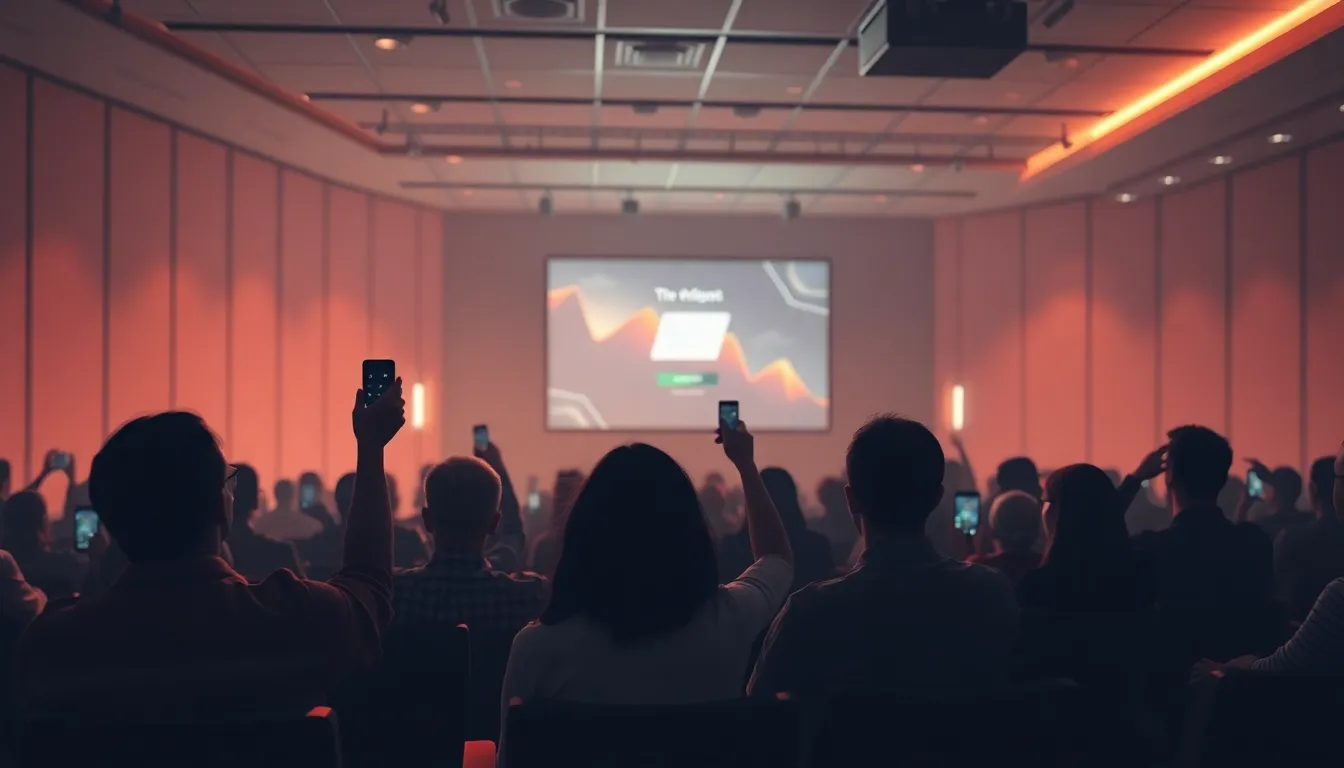
Let's be honest: corporate town halls have earned their reputation as the "eat your vegetables" of company events. Employees file in with coffee, brace for another slide deck of quarterly metrics, and count the minutes until they can escape back to their desks. But it doesn't have to be this way.
The landscape of corporate events is shifting dramatically. According to Bizzabo's 2026 research, 82% of attendees prefer in-person events over virtual equivalents, and 54% say they plan to attend more in-person events than the previous year. This resurgence of in-person gatherings presents a golden opportunity to reimagine the town hall experience—if you're willing to ditch the cringe-worthy tactics and embrace strategies that genuinely engage.
The stakes are higher than ever. In 2026, 67% of event professionals cite attendance as their most common success metric, followed by 56% tracking revenue generation and 54% measuring attendee engagement, according to Cvent research. For internal events like town halls, that engagement metric isn't just a nice-to-have—it directly impacts retention, culture, and alignment around company goals.
Why Traditional Town Halls Fall Flat
Before we dive into solutions, let's diagnose the problem. Traditional town halls typically follow a predictable pattern: executives present from stage, employees sit passively in rows, and maybe—if you're lucky—there's a stilted Q&A session at the end where three brave souls ask pre-approved questions.
This one-way broadcast model fundamentally misunderstands what makes events engaging in 2026. Your employees aren't looking for another webinar they could have watched on-demand. They're craving connection, recognition, and the feeling that their presence actually matters.
The "cringe factor" usually comes from forced participation that feels inauthentic. Ice breakers where people share "fun facts." Mandatory team cheers. Awkward attempts at viral dance challenges. These tactics fail because they're imposed from above rather than designed around genuine human motivation.
The Foundation: Psychological Safety and Clear Purpose
Before you implement any engagement tactic, you need to establish two foundational elements: psychological safety and clear purpose. Without these, even the most innovative ideas will land like a lead balloon.
Create Space for Honest Dialogue
Employees can smell corporate spin from a mile away. If your town hall feels like a carefully choreographed performance where difficult topics are off-limits, people will check out mentally even if they're physically present. Build trust by acknowledging challenges openly, admitting what you don't know, and creating genuine opportunities for questions—including tough ones.
Anonymous question submission tools work well here, but they're most effective when leadership actually addresses the hard questions rather than cherry-picking softballs. Consider dedicating a specific portion of your agenda to "questions we didn't want to answer but you deserve to hear about."
Define What Success Looks Like
What do you actually want people to walk away with? Is this town hall about celebrating wins, announcing strategic changes, gathering input on new initiatives, or building cross-departmental connections? Be ruthlessly clear about your objectives, and design every element to serve those goals.
This clarity also helps you avoid the engagement-for-engagement's-sake trap. Not every moment needs to be interactive. Sometimes people genuinely want to listen and absorb information. The key is being intentional about when you shift between modes.
Gamification That Doesn't Feel Juvenile
Here's where many organizers go wrong: they hear "gamification" and immediately think of gimmicky point systems or childish competitions. But sophisticated gamification taps into intrinsic human motivations—progress, mastery, autonomy, and recognition—in ways that feel natural rather than contrived.
Challenge-Based Participation
Instead of asking employees to "earn points for attending sessions" (which they're attending anyway), create meaningful challenges that encourage deeper engagement. For example:
- The Connector Challenge: Encourage employees to meet colleagues from three different departments they don't normally interact with, facilitated through QR code exchanges that log connections
- The Question Contributor: Recognize employees who submit thoughtful questions during the registration process, with the best ones featured during the live Q&A
- The Insight Hunter: Create a scavenger hunt-style activity where employees discover key information scattered throughout the venue or program materials
- The Feedback Champion: Reward completion of post-session feedback surveys with entry into prize drawings—but make the prizes actually desirable
The crucial difference? These challenges create genuine value beyond the points themselves. Meeting new colleagues builds actual relationships. Submitting questions surfaces real concerns. Completing feedback helps improve future events.
Visible Progress and Recognition
Leaderboards can work beautifully for corporate town halls when implemented thoughtfully. Display real-time engagement metrics on screens throughout the venue—not to shame low performers, but to create a sense of collective momentum. "We've received 247 questions so far" or "438 cross-department connections made today" shows that participation is happening and matters.
For individual recognition, consider digital passports that employees can see in action before your event. As attendees complete activities—attending breakout sessions, visiting sponsor booths, connecting with colleagues—they collect digital stamps that create a personalized record of their town hall experience. This transforms passive attendance into active exploration.
Interactive Formats That Actually Work
The key to avoiding cringe is choosing interaction formats that respect people's time, intelligence, and comfort levels. Here are tactics that consistently perform well:
Live Polling with Real Stakes
Don't just ask throwaway poll questions ("What's your favorite office snack?"). Use live polling to gather genuine input on business decisions, then commit to acting on the results. "We're deciding between three benefits package options for next year—cast your vote now and we'll announce the winner before you leave today."
The immediacy creates engagement, and the accountability—actually implementing what people vote for—builds trust that their participation matters.
Fishbowl Conversations
For town halls under 200 people, fishbowl formats create intimacy at scale. Set up a small circle of chairs in the center (the fishbowl) where a rotating group discusses a topic while everyone else listens. Leave one or two chairs empty so audience members can join the conversation by sitting down, sharing their perspective, and then returning to the outer circle.
This creates psychological safety—you're not putting someone on the spot with a microphone—while still enabling rich dialogue that everyone can hear and learn from.
World Café Rotations
For larger town halls, borrow the World Café methodology: break into small groups at round tables, discuss a specific question for 15-20 minutes, then rotate to new tables while one "host" stays behind to brief the new group. After several rotations, each table shares insights with the full room.
This format ensures everyone has a voice (much easier in groups of six than crowds of 600) while cross-pollinating ideas across the organization. It's particularly effective for strategic planning sessions or culture-building conversations.
Technology That Enables Rather Than Distracts
According to the ICE Benchmarking Report from 2025, 66% of organizers now use both CRM and event-tech platforms, while 44% use AI moderately and 31% are piloting AI capabilities. The technology landscape has matured significantly—but the key is choosing tools that enhance human connection rather than replace it.
Smart Question Management
Traditional Q&A sessions suffer from a few persistent problems: only extroverts speak up, microphone runners create awkward delays, and good questions get lost in the shuffle. Digital question platforms solve these issues by allowing employees to submit questions via their phones, upvote others' questions, and let moderators curate in real-time.
But here's the upgrade: use AI to cluster similar questions together. If 47 people ask variations of "What's happening with the merger?", your moderator can address the theme comprehensively rather than answering essentially the same question multiple times. Just make sure a human is reviewing the AI's categorization—as the Cvent Meetings Industry PULSE Survey from 2025 found, only 1 in 4 planners are currently using generative AI tools, partly because the technology still requires human oversight to get right.
Networking Profiles and Matching
One of the most valuable outcomes of town halls is informal networking—the conversations in hallways and over lunch that spark new ideas or collaborations. You can amplify this by creating lightweight attendee profiles where employees share their current projects, areas of expertise, or challenges they're facing.
Smart matching algorithms can then suggest connections based on complementary interests or needs. "Sarah from Product is working on improving onboarding—you mentioned that's a challenge for your team. Here's her contact info." This turns random small talk into strategic relationship-building.
The Digital Agenda as Engagement Hub
Your agenda shouldn't be a static PDF. Use a dynamic, mobile-friendly schedule that employees can personalize, receive notifications about, and interact with throughout the day. When someone bookmarks a breakout session, automatically suggest related sessions they might find valuable. When a session fills up, offer alternatives.
The best part? You can embed this public schedule view directly into your internal communications hub, so employees can explore all features of your town hall program before they even arrive. This pre-event engagement builds anticipation and helps people plan how they'll spend their time.
Measuring What Matters
Here's some encouraging news: proving event ROI is getting easier. According to Bizzabo's 2026 research, only 40% of organizers report difficulty proving event ROI, down from 70% in 2025. This dramatic improvement comes from better measurement tools and clearer frameworks for connecting event outcomes to business results.
For corporate town halls specifically, focus on these metrics:
Engagement Depth, Not Just Attendance
Yes, attendance matters—but 300 people sleeping through your presentations isn't success. Track deeper engagement: How many questions were submitted? What percentage of attendees participated in networking activities? How many completed the feedback survey? How long did people stay for optional social time afterward?
These behavioral signals tell you whether people found value in being there, which directly predicts whether they'll show up engaged next time.
Information Retention and Behavior Change
Two weeks after your town hall, send a brief quiz testing retention of key messages. Not to shame people who don't remember every detail, but to understand what actually landed. Then track whether the behaviors you were trying to encourage actually changed. Did cross-department collaboration increase? Did people adopt the new tools you introduced? Did policy updates get implemented correctly?
These lagging indicators prove whether your town hall drove real business outcomes, not just feel-good engagement in the moment.
The Budget Impact of Engagement
There's a direct financial incentive to get this right. According to 2026 research from Hopskip, events with high engagement scores secure budgets 23% larger the following year. When executives see that your town halls drive measurable results—better alignment, stronger culture, faster adoption of strategic initiatives—they'll invest more in making them even better.
This creates a virtuous cycle: better engagement leads to bigger budgets, which enables even more engaging experiences, which drives stronger results. The inverse is also true: low-engagement town halls that feel like wasted time will see their budgets shrink or get replaced by "more efficient" communications like all-company emails.
Avoiding Common Pitfalls
Even with the best intentions, certain mistakes can undermine your town hall's credibility:
The Fake Interactivity Trap
Don't ask for input you're not prepared to actually use. If decisions are already made, be honest about that. Say "Here's what we're doing and why" rather than "What do you think we should do?" when you're not genuinely open to alternatives. Fake participation breeds cynicism faster than no participation at all.
The Overscheduled Agenda
Cramming too much content into too little time is the enemy of engagement. People need mental processing time, bathroom breaks, and informal conversation opportunities. Build buffer time into your schedule. End sessions five minutes early rather than running over. Respect that attention is finite, and exhausted people don't engage.
The Tone-Deaf Celebration
Be mindful of context when planning celebratory elements. If you just announced layoffs, a jazz band and champagne reception will feel grotesque. If employees are burned out from months of crunch time, asking them to muster enthusiasm for team cheers feels disrespectful. Match your tone to the moment your organization is actually experiencing.
The One-Size-Fits-All Approach
Your employees aren't a monolith. Introverts and extroverts engage differently. Remote workers joining virtually need different support than in-person attendees. Frontline employees may have different information needs than corporate staff. Design multiple pathways to engagement rather than assuming everyone wants to participate the same way.
Making It Sustainable
The best town hall engagement strategy is one you can actually maintain over time. One-off spectacular events are nice, but consistent, reliably valuable experiences build the trust and anticipation that make engagement effortless.
Start with one or two engagement tactics you can execute well, then expand your toolkit as you build confidence and gather data about what resonates with your specific culture. Document what works so you're not reinventing the wheel each time. Create templates, playbooks, and systems that make the next town hall easier to plan than the last one.
And perhaps most importantly, close the loop. Share what you learned from each town hall—what feedback you received, what changes you're making in response, and how previous input shaped current decisions. When employees see their participation leading to tangible improvements, engagement becomes self-reinforcing.
Transform Your Next Town Hall
Corporate town halls don't have to be the dreaded calendar item everyone tries to skip. With thoughtful engagement design—rooted in psychological safety, enabled by smart technology, and measured against meaningful outcomes—you can create experiences people actually want to attend.
The opportunity is clear: employees are eager to return to in-person events, measurement tools are more sophisticated than ever, and the connection between engagement and business results is well-documented. What's needed now is the courage to break from the tired town hall playbook and try something genuinely different.
Ready to reimagine your corporate events with gamification, networking tools, and engagement features that feel natural rather than forced? Explore how Event Passport PRO can help you transform mandatory meetings into memorable experiences that drive real business results.