Nonprofit galas represent one of the most powerful fundraising tools available to organizations today. According to 2025 data from Bonterra Tech, 77% of nonprofits met or exceeded their event fundraising goals among organizations that hosted events that year. Yet behind these impressive numbers lies a persistent challenge: how do you maximize revenue while ensuring guests have such a remarkable experience that they become lifelong supporters?
The stakes have never been higher. In 2026, attendees arrive with elevated expectations shaped by consumer technology and corporate event standards. A 2026 survey from Bizzabo found that 73% of attendees expect in-person conferences to use modern event technology, with 55% saying the mobile event app can make or break their experience. For nonprofit organizers juggling tight budgets and ambitious goals, this creates a paradox: invest in experience enhancements that may not directly generate donations, or focus solely on fundraising mechanics and risk disengaging your donor base.
The answer lies not in choosing one over the other, but in understanding how exceptional guest experiences and successful fundraising are intrinsically connected. When donors feel engaged, valued, and emotionally connected to your mission, they give more generously—and they come back year after year.
Why Guest Experience Directly Impacts Fundraising Success
Traditional thinking treats guest experience and fundraising as separate objectives competing for the same resources. Progressive nonprofit leaders recognize them as complementary forces that amplify each other.
Consider the donor journey at a typical gala. Guests arrive, check in through a chaotic registration line, receive a program they'll glance at once, sit through dinner, and wait for the "ask" moment during speeches. The fundraising appeal happens in isolation from the overall experience, relying entirely on the emotional weight of mission videos and compelling speakers.
Now imagine an alternative approach: Guests check in seamlessly using QR codes, immediately seeing their name appear on a welcome screen. Throughout the evening, they participate in interactive experiences—visiting sponsor booths, learning about program impacts at mission stations, connecting with other supporters who share their interests. Each interaction builds emotional investment in your cause while creating moments of delight. When the fundraising appeal arrives, it's not an interruption but a natural extension of an already engaging evening.
According to BizBash's 2026 Corporate Events Benchmarking Report, 93% of surveyed corporate event professionals used attendee satisfaction as a key metric, while 60% said ROI is an intense focus when measuring event success. The nonprofit sector is rapidly adopting this dual-focus approach, recognizing that satisfied attendees become generous donors and enthusiastic ambassadors.
The Technology Foundation: Making Experience and Data Work Together
One of the most significant shifts in nonprofit event planning over the past two years has been the integration of technology platforms that serve both guest experience and organizational goals simultaneously.
In 2026, Bizzabo research revealed that 79% of organizers have their event platform integrated with CRM or marketing automation tools, supporting stronger measurement and follow-up. This integration is crucial for nonprofits because it allows you to track not just who attended, but how they engaged throughout the evening—and to translate that engagement data into personalized stewardship strategies.
Moving Beyond Basic Check-In
The guest experience begins the moment someone registers, but it crystallizes at check-in. Long lines and manual processes create immediate friction, while smooth, technology-enabled arrival sets a positive tone for the entire evening.
Modern QR code-based check-in systems eliminate bottlenecks while capturing valuable data. Guests receive their digital passport instantly, already loaded with their table assignment, agenda highlights, and personalized welcome message. For VIP donors, you can trigger special recognition notifications that allow staff to greet major supporters by name as they arrive.
This same technology infrastructure supports engagement throughout the event. Rather than treating check-in as a one-time transaction, you create an ongoing digital connection that enhances the physical experience.
Gamification as an Engagement Multiplier
Gamification might seem frivolous in the context of serious fundraising work, but the data tells a different story. When guests actively participate rather than passively observe, their emotional connection to your mission deepens—and deeper connections drive more generous giving.
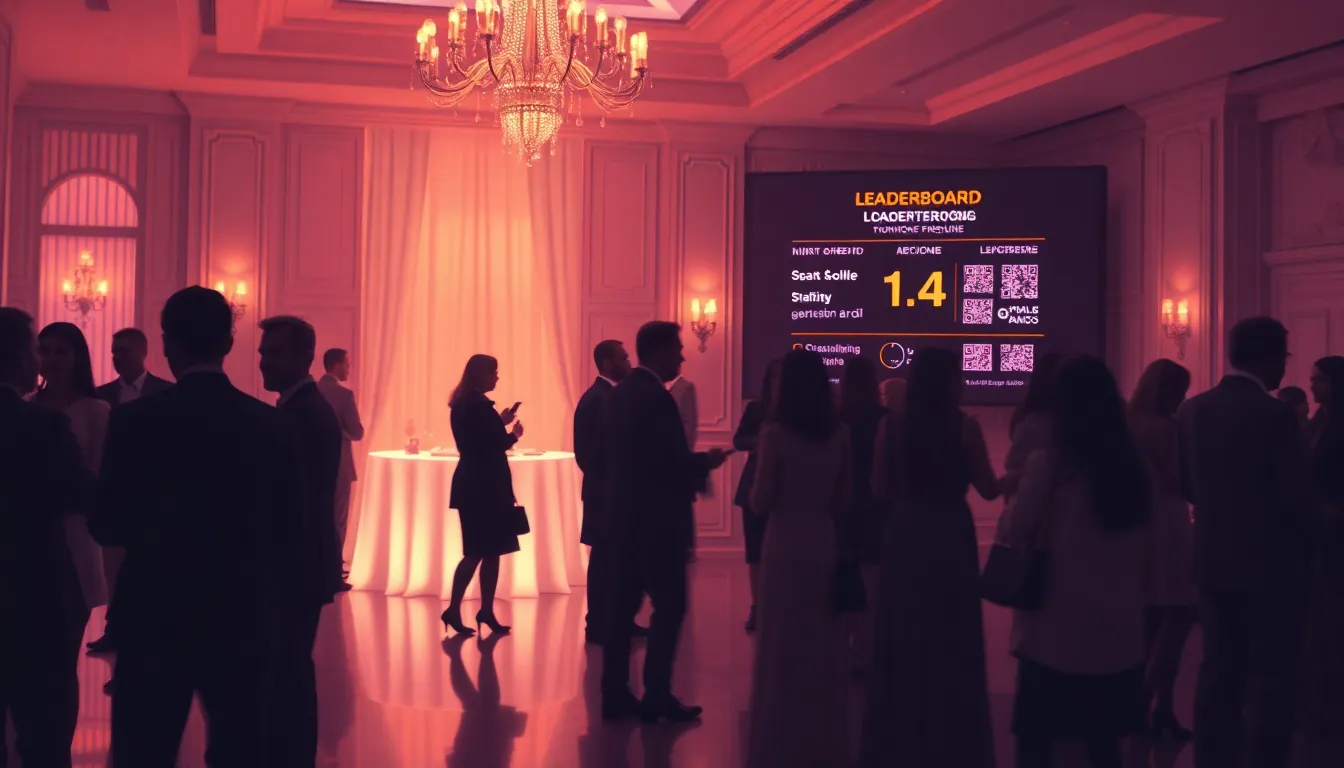
Consider implementing a digital stamp passport system where guests collect stamps by visiting different experience stations: the mission impact display, sponsor booths, the silent auction, program beneficiary meet-and-greets, and networking lounges. Each interaction educates donors about your work while creating friendly competition visualized on live leaderboards displayed throughout the venue.
This approach accomplishes multiple objectives simultaneously. Guests circulate throughout your venue rather than remaining seated, creating energy and movement. Sponsors receive guaranteed traffic to their booths, increasing sponsorship value. Program staff have natural conversation opportunities with donors. And you collect detailed engagement data showing exactly which aspects of your mission resonate most strongly with different donor segments.
You can see how the interactive passport experience works to understand how this technology translates to the nonprofit gala environment.
Designing Multi-Dimensional Fundraising Opportunities
The traditional gala fundraising model relies heavily on a single giving moment: the live appeal during the program. While this remains important, limiting fundraising to one concentrated ask leaves money on the table and creates unnecessary pressure on that single moment to perform.
Distributed Giving Throughout the Evening
Progressive nonprofit galas distribute fundraising opportunities across the entire event timeline, creating multiple entry points for donors at different giving levels and comfort zones.
Pre-event online auctions allow supporters to participate in fundraising even if they can't attend in person, extending your donor reach. During the event, silent auctions, raffle tickets, mission moment micro-donations, and fund-a-need appeals provide options for guests who may not be ready for major commitments but want to contribute meaningfully.
Technology platforms enable instant, frictionless transactions through mobile bidding and digital payment processing. When a guest sees an auction item they love, they bid immediately from their phone rather than walking to a physical bid sheet. This convenience factor demonstrably increases participation rates and final bid amounts.
Transparency Creates Trust and Urgency
Real-time fundraising thermometers displayed prominently throughout your event create collective momentum. As guests see progress toward your goal, social proof and competitive instinct encourage additional giving. This transparency also builds trust—donors see exactly how their community is responding and feel part of a larger movement.
Live leaderboards (which can be anonymized or recognition-based depending on your donor culture) similarly drive participation. Friendly competition motivates additional donations while publicly celebrating generosity in ways that align with your organizational values.
Sponsor Integration That Enhances Rather Than Interrupts
Corporate sponsors provide critical revenue for nonprofit galas, but sponsor recognition often creates friction in the guest experience. Lengthy verbal acknowledgments interrupt program flow, while sponsor signage can feel transactional rather than mission-aligned.
The solution lies in creating sponsor visibility opportunities that add value to the attendee experience rather than detracting from it.
Interactive Sponsor Showcases
Rather than relegating sponsors to static banners, create interactive sponsor stations where companies can demonstrate their community commitment through hands-on activities aligned with your mission. A healthcare sponsor might offer health screenings; a technology company could showcase accessibility tools; a financial institution might provide financial literacy resources relevant to your cause.
When these sponsor interactions are incorporated into your digital passport stamp collection system, you guarantee sponsor visibility while giving guests agency in how they engage. Sponsors receive measurable engagement metrics—exactly how many guests visited their booth, how long they stayed, what materials they downloaded—providing ROI data that justifies renewed support.
Branded Sponsor Profiles in Your Event Platform
Digital sponsor profiles within your event app or platform allow companies to share their story, showcase their community involvement, and even offer exclusive promotions to attendees. This creates value for sponsors while giving guests useful information and special perks.
Placement tiers in the digital environment (featured positioning, enhanced profiles, notification privileges) create differentiated sponsorship levels that generate incremental revenue without requiring additional physical real estate in your venue.
Networking: The Overlooked Experience Element
Nonprofit galas bring together donors, board members, community leaders, program beneficiaries, and mission-aligned professionals—creating powerful networking potential that often goes unrealized. Guests spend the evening at assigned tables, speaking primarily to the handful of people in their immediate proximity.
Facilitating meaningful connections transforms your gala from a transactional fundraising event into a community-building experience that provides lasting value beyond the evening itself.
Profile Discovery and Interest Matching
Event platforms with networking functionality allow attendees to create profiles highlighting their interests, professional background, and connection to your cause. Interest-based matching algorithms surface potential connections—perhaps a new donor interested in education programs meets a long-time volunteer who works directly with students.
These introductions would never happen organically in a traditional seated dinner format, but technology-facilitated networking creates serendipitous connections that deepen community engagement.
Structured Networking Opportunities
Designing intentional networking moments into your event flow encourages circulation and conversation. A pre-dinner reception with themed conversation stations, a mid-event "connection break" where guests are encouraged to introduce themselves to someone new, or a post-program dessert-and-networking session all create permission structures for interaction.
When networking is incorporated into your digital passport system—perhaps a stamp for "Make 3 New Connections"—you gamify relationship-building in ways that feel purposeful rather than forced.
Measurement: Proving ROI While Improving Future Events
One of the most encouraging trends in the nonprofit event space is the dramatic improvement in ROI tracking capabilities. According to 2026 research from Bizzabo, 40% of organizers still struggle to prove event ROI—but this represents significant progress from 70% in 2025, indicating measurable improvement in ROI tracking over just one year.
For nonprofit galas specifically, measuring success requires looking beyond the simple calculation of revenue minus expenses. True ROI encompasses donor retention rates, volunteer recruitment, mission awareness expansion, sponsor satisfaction, and attendee experience quality—all of which influence long-term organizational sustainability.
The Metrics That Matter
Comprehensive event platforms provide data across multiple dimensions that inform both immediate fundraising analysis and long-term strategy development:
- Engagement depth: Which guests visited mission displays, how long they spent at each station, which content they downloaded
- Networking activity: Connection requests made, profiles viewed, business cards exchanged digitally
- Sponsor interaction: Booth visit duration, materials accessed, follow-up actions taken
- Auction participation: Bid activity by individual, category performance, mobile vs. physical bidding
- Session attendance: If your gala includes breakout experiences, which topics drew the largest crowds
- Technology adoption: Platform usage rates, feature engagement, mobile app downloads
When this behavioral data integrates with your CRM system—which 79% of organizers have successfully implemented in 2026—you can segment donors based on engagement patterns and personalize post-event stewardship accordingly. A donor who spent significant time at your program impact display might receive follow-up materials about becoming a program sponsor, while someone who actively networked might be invited to join a young professionals council.
Artificial Intelligence and Predictive Analytics
According to Bizzabo's 2026 research, 95% of respondents expect their organization's use of AI in events to increase, with 35% anticipating significant increases. For nonprofit galas, AI applications are moving from experimental to practical.
Predictive analytics can identify which registered guests are most likely to make major gifts based on their engagement patterns leading up to the event, allowing staff to prioritize personal outreach. Natural language processing can analyze post-event survey responses at scale, surfacing themes and sentiment that inform future planning. AI-powered networking recommendations can facilitate higher-quality connections by analyzing profile data and suggesting introductions beyond simple keyword matching.
These technological capabilities don't replace the human relationships at the heart of nonprofit fundraising—they enhance your team's ability to build those relationships at scale.
The Agenda: Balancing Program Content With Social Time
Perhaps the most common mistake in nonprofit gala planning is overprogramming. Organizers, eager to maximize mission storytelling and donor recognition, pack the evening with speeches, videos, and presentations that leave no breathing room for the social interaction and relationship-building that actually drive long-term donor commitment.
The 60/40 Rule
A useful guideline: dedicate roughly 60% of your event time to unstructured social engagement and only 40% to formal programming. This feels counterintuitive when you have compelling stories to tell and important recognitions to make, but guests attend galas for the experience and community as much as the content.
A drag-and-drop agenda builder makes it easy to visualize your event flow, experiment with different timings, and ensure adequate balance between structured and unstructured time. When you share the agenda publicly through your event platform, guests can plan their evening strategically—arriving early for the networking reception, knowing exactly when the program will begin, understanding when silent auction bidding closes.
This transparency reduces anxiety (guests aren't worried about missing important moments) and increases engagement (they can plan to participate in elements that most interest them).
Mission Moments Over Marathon Speeches
Rather than lengthy presentations from multiple speakers, consider concentrated "mission moments"—tightly produced 90-second videos or three-minute live testimonials that deliver emotional impact without testing attention spans. Space these throughout the evening rather than clustering all program content in one extended block.
This pacing maintains energy, allows for natural breaks, and ensures guests remain emotionally present when you make your fundraising appeal rather than fatigued by excessive content.
Post-Event Follow-Up: Where Experience Becomes Relationship
The most successful nonprofit galas don't end when guests leave the venue—they transition into strategic stewardship sequences that convert positive experiences into lasting donor relationships.
Technology platforms that capture engagement data throughout your event enable personalized follow-up at scale. Rather than sending identical thank-you messages to all attendees, you can segment communications based on behavior:
- First-time attendees receive welcome materials and invitation to new donor orientation
- Auction winners get personalized messages about their specific purchases and their impact
- Guests who visited specific program stations receive deeper content about those initiatives
- Active networkers are invited to community events and volunteer opportunities
- Sponsors receive detailed engagement reports with specific ROI metrics
This level of personalization was once possible only for major donors with dedicated relationship managers. Event technology democratizes sophisticated stewardship, allowing you to treat every donor as an individual regardless of gift size.
Bringing It All Together: Technology as the Integration Layer
The common thread running through every aspect of balancing fundraising goals with guest experience is technology that serves both objectives simultaneously. Rather than choosing between investment in donor experience and investment in fundraising infrastructure, modern event platforms provide integrated solutions where these goals reinforce each other.
QR code check-in delights guests while capturing attendance data. Digital passports create engaging scavenger hunts while tracking mission education touchpoints. Live leaderboards build excitement while driving incremental donations. Networking features provide attendee value while facilitating community building that increases retention. Sponsor showcases generate revenue while enhancing the experience with valuable content and perks.
The key is selecting technology that's purpose-built for the unique needs of engaged, mission-driven events rather than adapting generic solutions. You can explore the full feature set designed specifically for creating these integrated experiences where engagement and fundraising goals align.
Moving Forward: Planning Your Next Gala With Balance in Mind
As you plan your next nonprofit gala, resist the temptation to optimize exclusively for short-term revenue generation. The organizations achieving the most sustainable fundraising success—the 77% who met or exceeded their event goals in 2025—are those who recognize that exceptional guest experiences create the foundation for long-term donor loyalty, increased giving over time, and enthusiastic word-of-mouth that expands your supporter base.
Start by auditing your current approach against the principles outlined above:
- Does your technology create seamless experiences while capturing actionable data?
- Have you distributed fundraising opportunities throughout the evening rather than concentrating them in a single moment?
- Are sponsors integrated in ways that add value to the attendee experience?
- Does your agenda balance mission content with adequate social time?
- Are you facilitating meaningful connections among your community members?
- Can you measure engagement depth beyond simple attendance numbers?
- Does your post-event stewardship leverage behavioral data for personalization?
The answers to these questions will reveal opportunities to enhance both guest experience and fundraising effectiveness—not as competing priorities, but as complementary strategies that amplify each other's impact.
The nonprofit sector is in the midst of a significant evolution in how we approach events. The data from 2025 and 2026 shows clear trends: increased technology adoption, improved ROI measurement, higher expectations from attendees, and recognition that experience quality directly impacts fundraising success. Organizations that embrace this integrated approach will build stronger donor communities, achieve more sustainable revenue growth, and ultimately advance their missions more effectively.
Your next gala doesn't have to choose between fundraising goals and guest experience. With thoughtful planning and the right technology infrastructure, you can deliver both—creating memorable evenings that inspire generous giving and lasting commitment to your cause. The balance you're seeking isn't a compromise between two competing objectives; it's a synergy where each element makes the other more powerful.