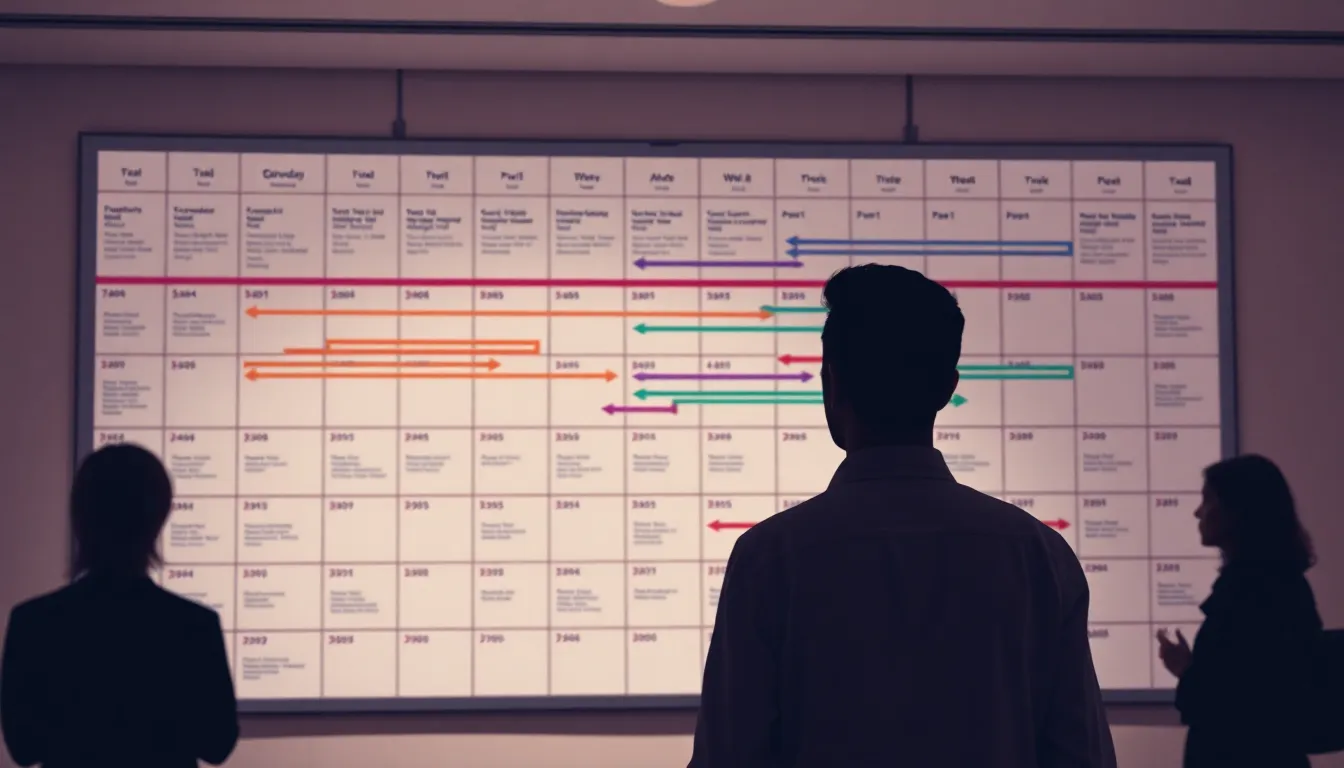
Multi-track conferences promise something for everyone. But when your most anticipated sessions run at the same time, attendees are forced to choose once when they build their personal agenda and again when conflicting sessions actually begin. That double decision creates frustration, reduces total session attendance, and dilutes the value your speakers and sponsors worked hard to deliver.
According to a 2026 report from RainFocus, average session attendance per attendee fell from 5.3 sessions in spring 2025 to 4.2 sessions in spring 2026. The same research found that participation in scheduled meetings at smaller events jumped 69% year over year, and attendance at smaller events rose 6.4% year over year. Attendees are choosing connection over content when sessions don't align with their needs or schedules.
Thoughtful multi-track scheduling can reverse that trend. By analyzing attendee priorities, balancing popular topics across time slots, and giving people clear paths through your agenda, you can reduce conflicts, increase total session attendance, and deliver measurable value to every stakeholder.
Why Multi-Track Conflicts Cost More Than You Think
Every scheduling conflict creates a ripple effect. When two high-demand sessions run simultaneously, half your audience misses each one. Speakers present to smaller rooms than they deserve. Sponsors who invested in premium placement lose impressions. And attendees leave feeling they missed critical content, which undermines their perception of the event's overall value.
The financial impact is tangible. A 2026 report from Bizzabo found that 40% of organizers report difficulty proving event ROI in 2026, down from 70% in 2025. While ROI measurement is improving, nearly half of event teams still struggle to connect attendance data with business outcomes. When session rooms sit half-empty because of scheduling conflicts, justifying speaker fees, venue costs, and production budgets becomes even harder.
Better scheduling data helps close that ROI gap. When you can demonstrate balanced attendance across sessions, consistent engagement per time slot, and high total session participation per attendee, you build a clear case for the value your agenda delivers. That insight also guides smarter topic selection, speaker investment, and sponsor placement for future events.
Start with Attendee Priorities, Not Wishful Thinking
The most common multi-track mistake is designing an agenda based on what you want attendees to care about rather than what they actually prioritize. If your registration form asks for job role, industry, and experience level, use that data to model which sessions will compete for the same audience.
Group sessions by likely audience overlap, not just by topic category. A keynote on AI strategy and a breakout on AI implementation tools will attract the same people. A workshop on negotiation skills and a panel on vendor management will draw overlapping crowds. When you schedule these sessions simultaneously, you force attendees to choose and guarantee lower attendance for both.
Instead, stagger high-overlap sessions across different time slots. Reserve simultaneous tracks for content that serves distinct audience segments: a technical deep-dive in one room while a leadership roundtable runs in another. This approach maximizes total reach and ensures every session finds its intended audience without competition.
Survey Before You Schedule
If you're planning a new conference or introducing a new track, ask registrants which topics matter most. A simple pre-event survey with ranked preferences or a "pick your top three" question gives you the data you need to separate high-demand sessions and avoid the biggest conflicts.
Review past event data if you have it. Which sessions had waitlists? Which rooms were over capacity? Which time slots saw the lowest overall attendance? Patterns from previous years often predict future demand, especially for recurring annual conferences.
Build Balanced Time Slots That Spread Demand
Once you know which sessions will compete for attention, your next goal is to balance demand across every time slot. If all your marquee speakers present in the morning and the afternoon schedule is filled with niche topics, you'll see strong morning attendance and empty afternoon rooms.
Distribute high-draw content evenly throughout the day. Pair a popular keynote with a specialized breakout in the same time slot, so attendees who aren't interested in the keynote still have a compelling option. Place one major session per track per time slot, and fill the remaining slots with complementary or exploratory content.
This strategy accomplishes two goals. First, it prevents the all-or-nothing dynamic where one session dominates a time slot and competing sessions sit nearly empty. Second, it keeps energy high across the full event schedule. Attendees stay engaged because every time slot offers at least one session they care about.
Account for Capacity and Room Constraints
Balancing demand also means accounting for physical capacity. If your most popular session holds 300 people but your second-most popular session only seats 80, scheduling them simultaneously wastes the larger room and creates overcrowding in the smaller one.
Match high-demand sessions with appropriately sized venues. If two sessions both need your largest room, schedule them sequentially rather than simultaneously. Use capacity limits and RSVP windows to manage expectations and prevent overcrowding.
Platforms like Event Passport PRO offer agenda-building tools that let you set session capacity, track RSVPs, and enforce registration deadlines, so you can see which sessions are filling up and adjust your schedule or room assignments before the event begins.
Give Attendees a Clear Path Through Your Agenda
Even with balanced time slots, a complex multi-track schedule can overwhelm attendees. When every hour offers four or five simultaneous sessions, decision fatigue sets in. Attendees skim descriptions, pick arbitrarily, or skip sessions altogether.
Help attendees navigate your agenda by offering suggested tracks or learning paths. Group related sessions into themed journeys: a data-analytics track, a leadership-development track, a product-innovation track. Label each session with its track, and publish a visual map showing how sessions connect across the day.
Suggested paths reduce cognitive load and guide attendees toward a cohesive experience. Someone interested in analytics can follow that track without evaluating every competing option. And if they want to jump tracks for a particular session, they still have that flexibility.
Provide Browsing and Filtering Tools
A mobile event app with robust filtering makes a big difference. Attendees should be able to filter sessions by topic, speaker, track, time, or room and build a personal schedule that automatically flags conflicts.
When an attendee tries to add two overlapping sessions to their agenda, the app should alert them and suggest alternatives in nearby time slots. That real-time feedback prevents the frustration of discovering a conflict only when it's too late to adjust.
Design Transition Windows That Respect Reality
Multi-track schedules often assume attendees can teleport between rooms. If your breakout sessions end at noon and the next round begins at 12:05, anyone moving between buildings or floors will arrive late, disrupt the session, and miss key opening context.
Build realistic transition windows into your schedule. A 10 to 15-minute gap between sessions gives attendees time to move between rooms, use restrooms, refill coffee, check messages, and arrive ready to engage. That buffer also accommodates sessions that run a few minutes over without cascading delays across the entire day.
If your venue is large or spread across multiple buildings, extend transition windows to 20 minutes and provide clear wayfinding signage. Attendees who feel rushed or lost are less likely to attend the next session, which reduces overall engagement and wastes your programming investment.
Align Breaks Across All Tracks
Synchronize breaks across every track so all attendees have the same opportunity to network, visit sponsors, and recharge. Staggered breaks fragment your audience, reduce sponsor visibility, and make catering logistics unnecessarily complex.
Shared breaks also create natural networking moments. Attendees from different sessions mix in the hallway, compare notes, and build the peer connections that often matter more than the content itself. A 2026 study from Bizzabo found that 71% of attendees believe in-person B2B conferences offer the most effective way to learn about new products or services, and much of that value comes from conversations that happen between sessions.
Use Data to Refine Scheduling in Real Time
Even the best-planned agenda will have surprises. A session you expected to be niche draws overflow crowds. A marquee speaker's time slot sees lower-than-expected attendance because it conflicts with an unplanned networking opportunity or a popular sponsor activation.
Monitor attendance patterns in real time and be ready to adapt. If a session is at capacity and turning people away, consider repeating it in a later time slot or moving it to a larger room for the next day. If a session consistently underperforms, evaluate whether the topic, time slot, or description needs adjustment for future events.
Event technology that tracks session attendance, RSVP fulfillment, and no-show rates gives you the visibility you need to make those calls. Analytics dashboards that show which time slots drive the highest engagement and which sessions attract repeat attendees help you optimize future schedules based on evidence rather than intuition.
Capture Post-Event Feedback on Scheduling
After your event, ask attendees which sessions they wanted to attend but couldn't because of conflicts. That feedback is gold for next year's planning. If the same conflict appears in multiple responses, you know exactly which sessions to separate in your next agenda.
Also ask whether attendees felt they had enough time to move between sessions, whether breaks were well-timed, and whether the overall pace felt comfortable or rushed. Use that qualitative insight alongside your attendance data to refine both the structure and the content of your multi-track schedule.
Turn Networking into a Programmed Experience
One reason session attendance drops is that attendees prioritize informal networking over structured content. If your hallway conversations are more valuable than your breakout sessions, people will skip the sessions.
Rather than treating networking as something that happens only during breaks, program it intentionally. Schedule dedicated networking blocks in your agenda, and use tools that help attendees connect with the right people rather than hoping chance encounters will happen.
Event Passport PRO includes a networking feature that lets attendees browse profiles, filter by interests, and request meetups. Vela, a multi-agent system where every attendee has their own agent, negotiates and books suitable meeting times and places automatically. That structure ensures networking happens without sacrificing session attendance, because both are part of the same intentional schedule.
Prove the Value of Your Scheduling Choices
When you reduce conflicts and increase total session attendance, you create measurable value for speakers, sponsors, and attendees. Speakers reach larger, more engaged audiences. Sponsors gain more impressions and interactions. Attendees leave feeling they got the full value of your content rather than missing half of what they wanted to see.
Document that value. Track average sessions attended per person, session capacity utilization, and the percentage of attendees who report satisfaction with the agenda. Share those metrics with stakeholders to demonstrate the ROI of thoughtful scheduling and build support for the resources and tools you need to keep improving.
Your multi-track agenda isn't just a logistical necessity. It's a strategic asset that shapes attendee experience, sponsor outcomes, and the long-term success of your event program. When you schedule with intention, data, and empathy for the attendee journey, you turn complexity into competitive advantage.
Ready to build smarter multi-track agendas that maximize attendance and engagement? Explore the Event Passport PRO agenda builder or try the interactive demo to see how session tracking, capacity management, and real-time analytics can simplify your next conference schedule.