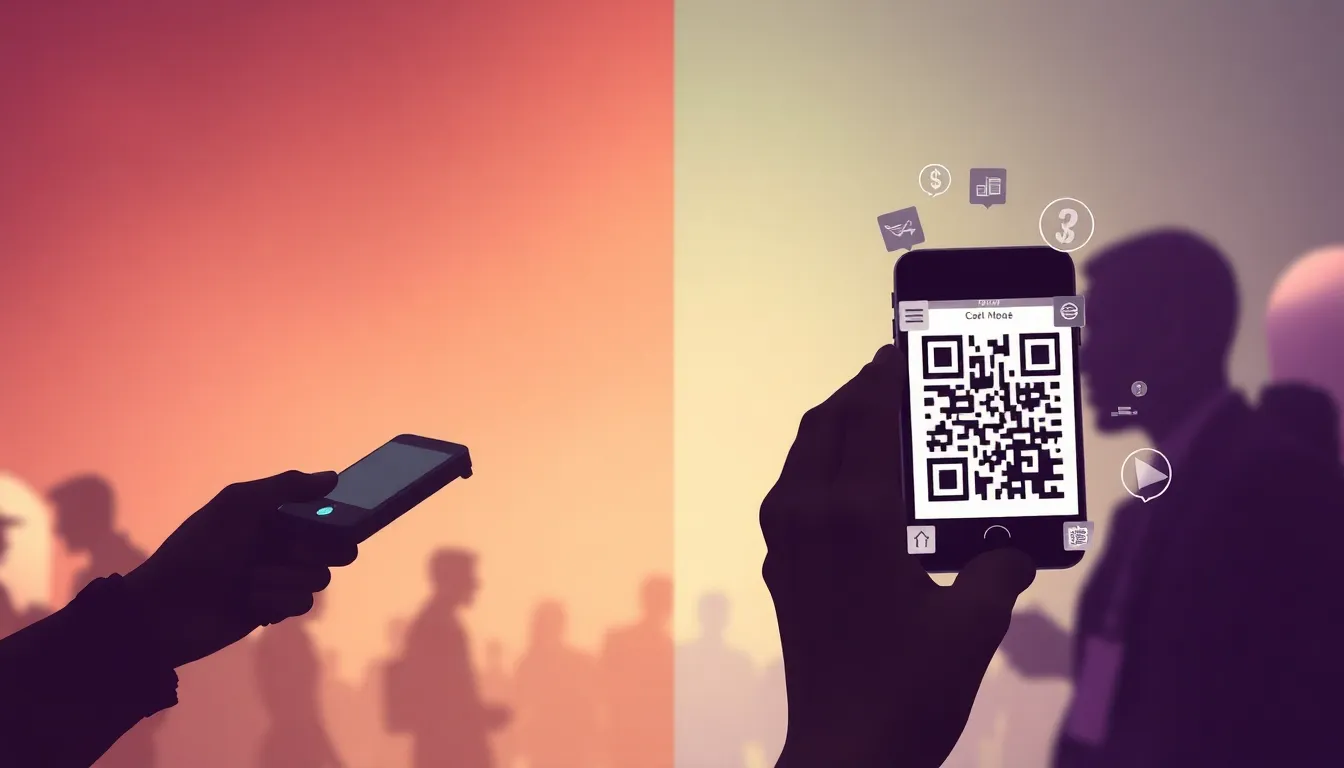
The lead retrieval debate has reached a tipping point. For years, event organizers and exhibitors have wrestled with a fundamental question: should we invest in dedicated hardware scanners or shift to app-based solutions? In 2026, the answer is clearer than ever—but it's not as simple as "one size fits all."
According to 2026 data from TradeShowPro Events, 54% of exhibitors now use lead retrieval apps for trade shows and conferences, up from just 41% in 2023. Perhaps more tellingly, 78% of those who switched to digital capture said they would never go back to manual methods. The momentum is undeniable, but the question remains: what's driving this shift, and more importantly, what's actually worth the investment for your events?
The Current State of Lead Retrieval Technology
The lead capture market has evolved from a niche event service into a billion-dollar industry with serious momentum. In 2025, the global trade show lead retrieval market was valued at $0.6 billion, with projections pointing toward $1.2 billion by 2034, according to MarketIntelo's comprehensive 2025 market analysis.
What's particularly revealing is how that value breaks down. In 2025, cloud-based lead retrieval deployments—typically app-based scanning and platform solutions—accounted for 58.3% of global revenue, compared with just 41.7% for on-premises or dedicated hardware-centric deployments. This majority shift toward software and app models reflects a fundamental transformation in how event professionals think about lead capture.
The buyer landscape is equally instructive. Event organizers represented the largest end-user group in 2025 with 38.6% market share, while exhibitors accounted for 35.2%. This near-even split underscores an important reality: both organizers and exhibitors are making independent technology decisions, often with different priorities and constraints.
Traditional Hardware Scanners: The Established Approach
Dedicated lead retrieval hardware—those familiar handheld badge scanners you see at every major trade show—has been the industry standard for decades. And for good reason: when they work, they work reliably.
The Case for Hardware
Purpose-built scanners offer several genuine advantages. They're designed exclusively for badge reading, which means fewer points of failure. Battery life is typically optimized for all-day booth duty. The learning curve is minimal—hand someone a scanner, show them the trigger button, and they're ready to capture leads.
For large-scale events with hundreds of exhibitors, organizer-provided hardware also ensures consistency. Every booth operates with the same technology, the same data format, and the same technical support channel. When you're managing a trade show floor with 500+ exhibitors, that standardization has real operational value.
Enterprise buyers—who dominated demand for lead retrieval technology in 2025 with 62.1% market share, according to MarketIntelo—often gravitate toward hardware solutions because they integrate with existing CRM workflows and meet IT security requirements.
The Hidden Costs No One Talks About
Here's where the hardware model starts to show cracks. Rental fees typically range from $400 to $1,200 per unit per event, depending on the show and the technology tier. For exhibitors attending multiple events annually, those costs compound quickly.
Then there's the data lock-in problem. Many hardware providers deliver leads in proprietary formats or through closed portals, adding friction to the handoff between your event team and your sales team. Export delays, format conversions, and manual data cleaning eat hours of post-event productivity.
And let's address the elephant in the booth: hardware fails. Batteries die mid-afternoon. Scanners freeze. Badge formats change between events, and suddenly your $800 rental can't read the codes. When you're paying premium rental fees, these failures sting twice—once in lost leads, once in sunk cost.
App-Based Scanning: The New Majority
The rise of app-based lead retrieval represents more than just a technology shift—it's a fundamental rethinking of what lead capture should cost, how it should work, and who should control the data.
Why Apps Are Winning
The adoption curve tells the story. By 2025, software-based and app-driven solutions already held 45.2% share of the lead retrieval market, according to MarketIntelo, and a 2026 event-tech landscape analysis confirmed that QR-based and app-based digital capture has overtaken paper and static methods, with cloud and app solutions capturing the majority of new deployments by 2025–2026.
The appeal is straightforward: bring your own device (BYOD), download an app, and start scanning. No rental fees. No equipment pickup and return. No learning a new device every time you exhibit at a different show.
Modern app-based platforms have solved the early reliability concerns that plagued first-generation mobile scanning. Camera quality on current smartphones rivals dedicated hardware. Offline modes ensure leads are captured even when conference center WiFi falters. And cloud sync means your sales team can access fresh leads in real time, not three days after the show when the data export finally arrives.
Cost Structure and ROI
Let's talk numbers. A typical app-based lead retrieval platform charges $50 to $300 per event for unlimited scanning, or offers annual subscriptions in the $500 to $2,000 range for exhibitors attending multiple shows. Compare that to hardware rentals at $400–$1,200 per event, and the math is compelling.
The 2026 Event Tech Live landscape report estimated the event lead capture market at several hundred million to roughly £1.5 billion annually, sitting within a broader exhibition industry generating £67–71 billion globally. Those figures underscore the scale of budget decisions event teams are making between rented hardware scanners and BYOD/app-based systems.
For event organizers, the calculus is different but equally interesting. Offering a free or low-cost app-based scanning option as part of your exhibitor package reduces logistics complexity, eliminates hardware inventory management, and positions your event as tech-forward. You can explore all features that modern platforms bring beyond simple badge scanning—gamification, networking, agenda integration—to see how lead capture fits into a broader engagement strategy.
What the Data Reveals About Real-World Performance
Adoption rates are one thing; satisfaction and results are another. The 2026 TradeShowPro Events data offers a crucial insight here: 78% of exhibitors who switched to digital capture methods said they would never go back to manual methods. That's not just preference—it's conviction born from experience.
What's driving that loyalty? Speed and workflow integration top the list. App-based systems typically offer instant CRM integration, automated lead scoring, custom qualification forms, and real-time notifications. When a hot lead walks into your booth, your sales director can get a Slack ping before the conversation even ends.
Traditional hardware, by contrast, often operates in a data silo. You scan badges all day, then download a CSV file that night (if you remember), then import it into your CRM (if the format matches), then assign follow-ups (if you have time before the next session). Each step introduces delay and friction.
The shift toward cloud-based deployments—which captured 58.3% of global revenue in 2025—reflects this workflow advantage. Cloud platforms don't just store leads; they activate them within existing sales and marketing systems.
Beyond Binary: Hybrid and Context-Specific Solutions
Here's the nuance most "hardware vs. app" debates miss: the best solution often depends on your event type, exhibitor profile, and organizational maturity.
When Hardware Still Makes Sense
High-security environments—government contractors, healthcare, financial services—sometimes mandate dedicated devices to meet compliance requirements. If your event serves these verticals, hardware may be non-negotiable for a subset of exhibitors.
Similarly, if your exhibitor base skews toward smaller businesses with limited technical infrastructure, providing turnkey hardware can reduce support burden and ensure consistent data quality across all booths.
When Apps Are the Clear Winner
For events with tech-savvy exhibitors, multi-day conferences where attendees and exhibitors mingle across sessions, or any scenario where real-time lead activation matters, app-based scanning is demonstrably superior.
Apps also unlock capabilities that hardware can't touch. QR-based passport programs, for example, turn lead capture into a two-way engagement tool. Attendees collect digital stamps at exhibitor booths, compete on leaderboards, and unlock prizes—while exhibitors capture qualified leads and track booth traffic patterns. This gamification layer transforms passive badge scanning into active audience participation.
The Hybrid Approach
Progressive event organizers are offering both. Provide a recommended app-based platform as your default exhibitor tool—bundled into your exhibitor package at no extra cost or at a group discount. Then offer traditional hardware rentals as an optional upgrade for exhibitors who need or prefer dedicated devices.
This hybrid model gives you the operational efficiency of a standardized platform while accommodating edge cases. It also positions your event as flexible and exhibitor-centric rather than prescriptive.
Implementation Considerations: What Actually Matters
Choosing between hardware and apps is only the first decision. Implementation quality determines whether your lead capture strategy succeeds or stumbles.
Integration and Data Flow
Ask hard questions about CRM integration. Does the platform offer native connectors for Salesforce, HubSpot, Marketo, and your exhibitors' top tools? How quickly do leads sync? Can exhibitors customize qualification fields to match their sales process?
If you're evaluating app-based solutions, test the offline functionality. Conference centers are notorious for spotty WiFi. Any platform worth its subscription fee should capture leads offline and sync automatically when connectivity returns.
User Experience and Training
The best technology is the technology people actually use. Evaluate the exhibitor onboarding process. Is setup intuitive, or does it require a 30-minute training video? Can booth staff start scanning with less than two minutes of instruction?
For organizers, consider the attendee experience too. If your lead retrieval strategy involves QR codes on badges, make sure those codes are prominently placed, clearly explained, and—critically—that they actually scan reliably under typical booth lighting conditions.
Gamification and Engagement Layers
This is where modern platforms separate themselves from legacy solutions. The same QR technology that enables app-based lead capture can power attendee engagement programs that drive floor traffic, extend dwell time, and create measurable value for exhibitors beyond the lead list.
Passport programs with digital stamps, challenge-based scavenger hunts, and live leaderboards turn your event into an interactive experience. Attendees have a reason to visit more booths. Exhibitors get higher-quality interactions with attendees who are actively engaged rather than passively wandering. And you, as the organizer, can quantify engagement in ways that strengthen your value proposition for next year's sponsors.
If you haven't seen how this works in practice, you can try the interactive demo to experience the exhibitor and attendee perspectives firsthand.
Making the Decision: A Framework for Event Organizers
Here's a practical decision framework based on the data and real-world implementations:
Choose app-based as your primary solution if:
- Your exhibitors are attending multiple events annually and rental costs are a pain point
- Real-time lead access and CRM integration are priorities for your exhibitor base
- You want to layer gamification, networking, or engagement features on top of lead capture
- Your event serves tech-comfortable industries (SaaS, marketing, professional services, etc.)
- You value operational simplicity and want to eliminate hardware logistics
Offer hardware as a primary or hybrid option if:
- Your exhibitor base includes regulated industries with strict device policies
- You're running a very large trade show (500+ exhibitors) where standardization is critical
- Your audience skews toward less tech-savvy attendees or exhibitors
- You have existing contracts or relationships with hardware providers that deliver proven value
Consider a hybrid model if:
- Your exhibitor base is diverse in size, sophistication, and technical needs
- You want to future-proof your event while accommodating current exhibitor preferences
- You're willing to manage slightly more complexity to maximize exhibitor satisfaction
The Verdict: What's Actually Worth It
The data from 2025 and 2026 points to a clear directional trend: app-based, cloud-driven lead capture is becoming the majority choice for good reasons. Lower costs, better integration, real-time access, and the ability to layer engagement features on top of basic scanning make apps the superior choice for most events and most exhibitors.
But "most" isn't "all." Hardware still has legitimate use cases, particularly in large-scale trade shows, regulated industries, and scenarios where exhibitor technical capability is limited.
The real mistake isn't choosing hardware over apps or vice versa—it's making the choice by default rather than by design. Evaluate your exhibitor needs, test actual platforms, calculate total cost of ownership over a full year or event cycle, and make an intentional decision that aligns technology with your event goals.
And remember: lead capture is just one piece of the event engagement puzzle. The platforms delivering the most value in 2026 aren't just digitizing badge scans—they're creating interconnected experiences that engage attendees, empower exhibitors, and generate data that makes every future event better.
Whether you're planning your first trade show or your fiftieth, the lead retrieval decision matters. The good news? You now have more options, better data, and clearer evidence than ever to make the right call for your event. The technology has matured. The costs have come down. And the exhibitors who matter most to your event's success are ready to embrace solutions that actually work—as long as you're ready to offer them.