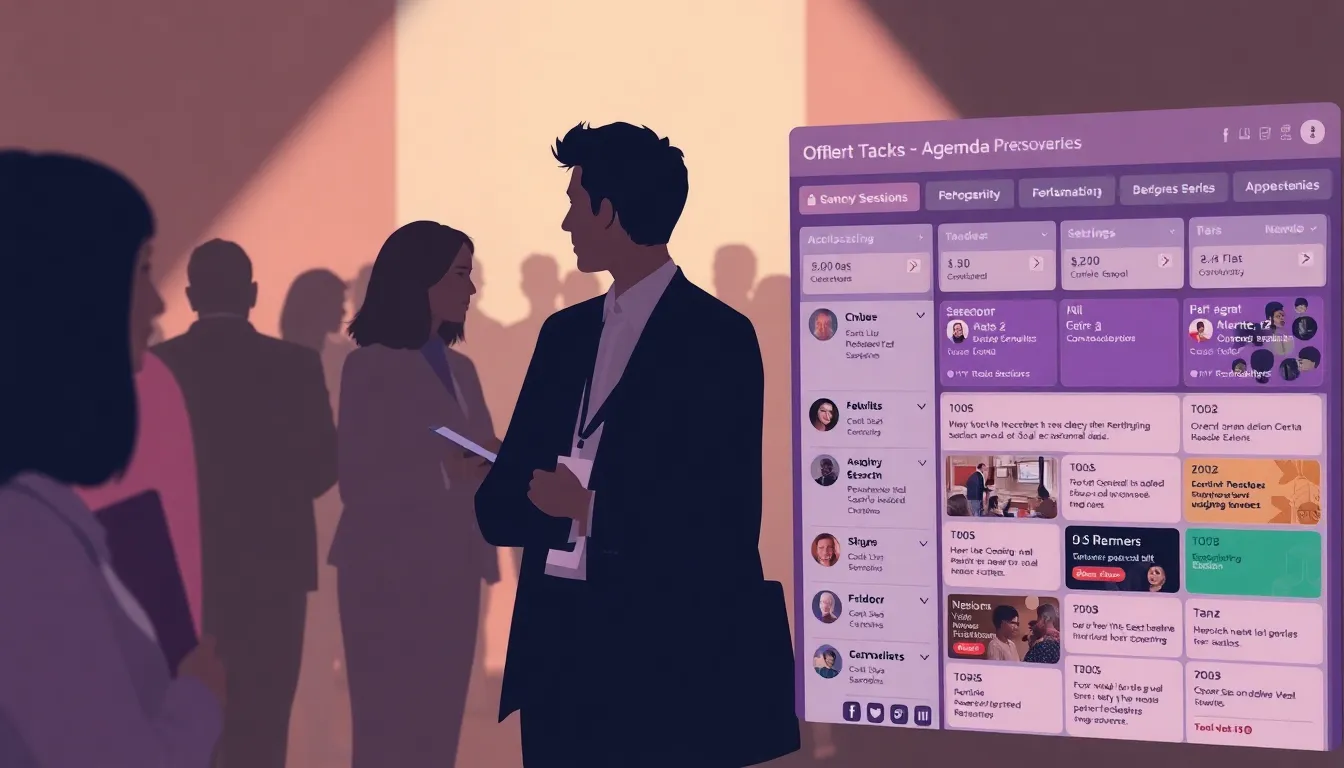
The most common mistake event planners make isn't choosing the wrong venue or pricing tickets incorrectly. It's building an agenda for an imaginary "average attendee" who doesn't actually exist. Your conference floor is filled with distinct groups—each with different goals, different experience levels, and different definitions of success. Yet too many organizers craft their programming as if everyone walked through the door wanting exactly the same thing.
In 2026, attendees have more options than ever before. According to EVENTTRACK 2026 research, 56% of event attendees surveyed said they will attend more events than they did in 2025, with even higher rates among B-to-B and trade show audiences. With rising event participation comes rising expectations. When someone chooses your event over the dozens of alternatives competing for their calendar space, they're making a calculated investment. Your agenda needs to deliver personalized value—not a one-size-fits-all experience.
That's where attendee segmentation and persona development come in. Before you book a single speaker or map out session tracks, you need to understand who is coming and why. This strategic foundation transforms your agenda from a generic schedule into a curated experience that resonates with each participant segment, driving higher satisfaction, better engagement, and measurable event ROI.
Why Persona Development Is Your Event's Strategic Foundation
Attendee personas are detailed, semi-fictional profiles representing the distinct segments within your event audience. They go beyond basic demographics to capture motivations, pain points, experience levels, learning preferences, and success metrics. When developed with rigor and insight, personas become the lens through which every programming decision is made.
The data shows that understanding your audience has never been more critical. A 2026 Bizzabo study found that 73% of attendees expect in-person conferences to use modern event technology. But technology alone isn't the answer—it's about using the right tools to serve the right needs. A first-time attendee overwhelmed by a massive conference has completely different technology needs than a seasoned industry veteran looking to maximize networking efficiency.
Similarly, a 2026 Remo.co survey revealed that 61% of attendees said their primary reason for attending a professional event is networking and collaboration. This statistic tells you what matters, but persona development helps you understand how different segments define successful networking. The junior professional wants to build their network broadly. The C-level executive wants targeted introductions to specific decision-makers. The sponsor representative wants qualified leads. One networking lounge doesn't serve all three equally.
The Cascade Effect of Persona-Driven Planning
When you build personas first, everything that follows becomes clearer and more strategic. Your session topics align with actual knowledge gaps. Your speaker selection reflects the credibility levels different segments trust. Your technology choices support the specific behaviors you want to encourage. Even your pricing tiers and sponsorship packages become more sophisticated when you understand the distinct value propositions for each attendee type.
Without personas, you're guessing. With them, you're architecting intentional experiences backed by participant insight.
Identifying Your Core Attendee Segments
Every event has unique segments, but most fall into recognizable patterns. The key is moving beyond surface-level job titles to understand the underlying behavioral and motivational differences that affect how people experience your event.
Common Segmentation Dimensions
Start by analyzing your attendees across multiple dimensions:
- Experience level: First-time attendees, occasional participants, annual regulars, industry veterans
- Professional role: Practitioners, managers, executives, students, researchers, vendors
- Attendance goals: Learning/education, networking, business development, product research, thought leadership, recruitment
- Company size and type: Enterprise, mid-market, startup, agency, nonprofit, academic
- Industry vertical or specialization: Relevant sub-sectors within your broader event focus
- Geographic origin: Local, regional, national, international (affects arrival patterns and social dynamics)
- Content preference: Tactical how-to sessions, strategic big-picture talks, case studies, hands-on workshops, peer discussions
The goal isn't to create thirty micro-segments. It's to identify the four to six personas that represent meaningfully different event experiences. Look for the combinations of attributes that cluster together and create distinct needs.
Data Sources for Segmentation Insights
If you've run this event before, you're sitting on a goldmine of segmentation data. Analyze registration information, session attendance patterns, survey responses, and engagement metrics. Which sessions had the highest attendance? Which had the highest satisfaction ratings? Were there patterns in who attended what?
For new events, lean on industry research, competitor analysis, stakeholder interviews, and pre-event surveys. Even a simple registration questionnaire asking attendees about their goals and experience level provides valuable segmentation signals.
The integration of event technology with marketing systems makes this easier than ever. According to 2026 Bizzabo research, 79% of organizers have their event platform integrated with CRM or marketing automation tools. This connectivity means segmentation data can flow seamlessly from your marketing database into your event planning, creating a continuous feedback loop that refines personas over time.
Crafting Detailed Attendee Personas
Once you've identified your core segments, it's time to bring them to life with detailed persona profiles. Each persona should feel like a real person you could have a conversation with—because ultimately, hundreds of real people matching that profile will attend your event.
Essential Elements of a Strong Persona
A complete attendee persona includes:
- Name and demographic snapshot: Give your persona a name and basic professional details (job title, company size, years of experience)
- Background and context: What's their career trajectory? What challenges are they facing in their role right now?
- Event goals and motivations: Why are they attending? What would make this event a success in their eyes?
- Pain points and barriers: What frustrates them at events? What obstacles might prevent them from getting value?
- Content preferences: What session formats resonate? How deep or tactical do they want to go?
- Networking style: Are they extroverted or reserved? Seeking peers or looking to meet senior leaders?
- Technology comfort level: How do they prefer to navigate an event? Mobile-first or traditional printed programs?
- Success metrics: How will they measure ROI? What will they tell their boss or team when they return?
Sample Persona: "Strategic Sarah"
To illustrate, let's develop one detailed persona for a professional conference:
Strategic Sarah is a Marketing Director at a mid-sized B2B software company. She has 8-10 years of experience and manages a team of five. Sarah attends one or two major conferences annually, carefully selected for strategic value. Her primary goal is staying ahead of industry trends and bringing back actionable insights that position her team as forward-thinking.
Sarah's pain points include wasting time in basic-level sessions that don't match her experience, missing key networking opportunities because she doesn't know who else is attending, and struggling to justify her time away from the office. She prefers high-level strategic sessions with data-driven insights, panel discussions featuring recognizable industry leaders, and structured networking opportunities that feel efficient rather than awkward.
Sarah measures success by the quality of connections made (two to three meaningful new relationships), takeaways she can present to her executive team, and visibility into emerging trends before her competitors. She's highly comfortable with technology and expects a seamless mobile event experience, including the ability to explore all features of the event platform before she arrives.
With this level of detail, every decision becomes clearer. You know Sarah needs intermediate-to-advanced content tracks. You know she values curated networking over open mixers. You know she'll engage with gamified challenges that showcase her expertise and help her discover relevant peers. You're not planning for an abstract "marketing professional"—you're creating an experience for Sarah and the segment she represents.
Mapping Personas to Agenda Architecture
Now comes the practical application: using your personas to architect an agenda that serves each segment intentionally. This doesn't mean creating completely separate tracks for each persona—it means ensuring every persona has a clear path through your event that delivers their definition of value.
Content Track Development
Design session tracks that align with the experience levels and content preferences you've identified. A common architecture includes:
- Foundations track: For newcomers and those seeking fundamental knowledge
- Practitioner track: Tactical, how-to sessions for hands-on professionals
- Leadership track: Strategic, high-level content for decision-makers
- Innovation/emerging trends track: Cutting-edge topics for early adopters
- Industry-specific tracks: Vertical deep-dives when your audience spans multiple sectors
Clearly label these tracks and communicate what persona each serves. Don't make attendees guess whether a session is right for them—tell Strategic Sarah explicitly that the leadership track was designed for her experience level and goals.
Session Formats Matched to Learning Preferences
Different personas absorb information differently. Your agenda should include varied formats:
- Keynotes for shared foundational messages that unite all personas
- Breakout sessions for targeted deep-dives
- Workshops and hands-on labs for tactically-minded personas
- Panel discussions for strategic thinkers who value multiple perspectives
- Peer roundtables for networking-focused personas who learn best from conversation
- Lightning talks for personas with limited time who want concentrated insights
- Office hours or expert consultations for personas seeking personalized guidance
Timing and Flow Considerations
Persona insights should also inform when you schedule activities. If you have a significant segment of local attendees, they may skip evening events to get home. If you're attracting international participants, you might schedule important networking earlier in the multi-day event before jet lag impacts energy levels. If a persona segment includes senior executives, they may only attend for a condensed portion of your event—make sure high-value leadership content is concentrated when they're present.
Leveraging Technology to Personalize the Attendee Journey
Even the best persona-driven agenda falls short if attendees can't navigate it effectively. This is where modern event technology transforms persona research into personalized experiences. The expectation is clear: that 2026 Bizzabo finding that 73% of attendees expect modern event technology isn't about flashy gadgets—it's about tools that help each person find their optimal path through your event.
Gamification as a Segmentation Tool
Gamification features like digital passport stamp collection, challenges, and leaderboards serve dual purposes. They drive engagement while simultaneously revealing attendee behavior patterns that validate and refine your personas. When you offer challenges like "Attend three Leadership Track sessions" or "Connect with five fellow first-time attendees," you're both guiding personas toward relevant content and gathering data on who self-selects into which experiences.
QR code check-ins at sessions create frictionless tracking of attendance patterns without requiring manual surveys. Over the course of an event, you can see in real-time whether your persona assumptions are holding true—are the people you expected to attend advanced sessions actually showing up, or is there a mismatch that requires on-the-fly adjustment?
Networking Features Tailored to Persona Preferences
Remember that 61% of 2026 attendees prioritizing networking and collaboration? That statistic becomes actionable when you understand how each persona wants to network. Modern platforms can support multiple networking styles simultaneously:
- Interest-based matching algorithms for personas who want to discover relevant peers
- VIP or invitation-only networking spaces for executive personas seeking curated connections
- Scheduled one-on-one meeting tools for business development-focused personas
- Profile discovery features that let strategic attendees research who else is present before the event starts
- Leaderboards and achievement recognition for competitive personas who engage more when their participation is visible
The key is offering choice. Different personas can navigate the same event through different lenses, each finding the networking structure that matches their comfort level and goals. You can see it in action by exploring how integrated networking and gamification features create these parallel personalized experiences within a single event framework.
Agenda Interfaces That Support Discovery
A persona-driven agenda is only valuable if attendees can navigate it. Your agenda interface should support filtering and discovery based on the segmentation dimensions you've identified—experience level, topic area, session format, and more. Attendees should be able to build their personal schedule in minutes, confident that they've found the sessions designed for someone exactly like them.
Consider recommendation engines that suggest sessions based on registration data or early check-in patterns. If someone identifies as a first-time attendee during registration, proactively surface orientation sessions and networking icebreakers. If someone's LinkedIn profile indicates a senior title, highlight leadership track content. The more you reduce friction in agenda navigation, the more likely each persona finds their optimal experience.
Validating Personas Through Pre-Event Engagement
Persona development shouldn't stop when you finalize your agenda. The period between registration and event day is your opportunity to validate assumptions, gather additional data, and begin personalizing the experience before anyone walks through the door.
Pre-Event Surveys and Preference Collection
Send targeted surveys that ask registrants about their goals, experience level, and interests. Frame these not as burdensome questionnaires but as tools that help you serve them better. "Help us personalize your event experience" gets better response rates than "Complete our attendee survey."
The responses allow you to refine persona distributions—if you expected 30% of attendees to be first-timers but registration data shows 50%, you can adjust session capacity and staffing accordingly. You can also begin segmenting your communications, sending different pre-event emails to different personas with customized agenda recommendations.
Early Networking and Community Building
Consider activating networking features before the event begins. Allow registered attendees to complete their profiles, browse who else is attending, and even request meetings in advance. This serves multiple purposes: it gives networking-focused personas a head start on their primary goal, it generates engagement data you can analyze, and it builds anticipation and commitment that reduces no-show rates.
For certain personas—particularly those attending primarily for business development or partnership opportunities—the ability to strategically plan their event networking in advance dramatically increases perceived value. They're not hoping to accidentally bump into the right people; they're arriving with confirmed meetings and clear objectives.
Measuring Success Across Persona Segments
Post-event measurement becomes more sophisticated when you analyze outcomes through a persona lens. Overall satisfaction scores are useful, but persona-specific metrics reveal whether you actually delivered on your segmentation strategy.
Segment-Specific Satisfaction and NPS
When you survey attendees, capture enough demographic and behavioral data to disaggregate responses by persona. Did Strategic Sarah's segment rate the event differently than first-time attendees? Were satisfaction scores higher for the personas whose needs you prioritized in agenda design?
Look for patterns in open-ended feedback. If multiple people matching a specific persona mention the same gap or pain point, that's a clear signal for refinement. Your personas are hypotheses—post-event data either validates them or reveals where your assumptions missed the mark.
Behavioral Analytics and Engagement Patterns
Attendance data, session ratings, networking activity, and gamification participation all provide behavioral validation of your personas. Did the sessions you designed for advanced practitioners actually attract that audience, or did you misjudge the experience level distribution? Did the networking features you built for introverted personas get used, or do you need a different approach?
The growth in event attendance we're seeing makes this analysis increasingly valuable. That 2025 Vesta finding that 53.1% of event organizers reported increased attendance in 2025, up from 43.8% in 2024, suggests the events that are thriving are the ones getting these fundamentals right. As your event grows, persona-based analytics ensure that growth doesn't dilute the personalized experience that drove success in the first place.
Long-Term Persona Evolution
Your personas should evolve as your industry, your event, and your audience evolve. An annual review process that incorporates the previous year's data, emerging industry trends, and stakeholder input keeps personas relevant and actionable. Perhaps a new segment is emerging—you're seeing more attendees from a particular vertical or role that wasn't significant before. Perhaps technology adoption has shifted and a persona you assumed was tech-resistant is now expecting digital-first experiences.
Treat persona development as an ongoing strategic discipline, not a one-time planning exercise. The events that consistently deliver exceptional experiences are the ones that continuously refine their understanding of who they serve and why those people attend.
From Personas to Personalized Experiences
The ultimate goal of attendee segmentation isn't just a better-organized agenda—it's creating moments throughout your event where each participant feels like the experience was designed specifically for them. When Strategic Sarah walks into a leadership track session and immediately recognizes that everyone in the room is at her level, facing her challenges, and speaking her language, you've succeeded. When a first-time attendee follows a gamified passport that guides them to orientation, introductory sessions, and ice-breaker networking activities, they feel welcomed rather than overwhelmed.
This level of personalization used to require enormous manual effort and intimate event scale. Today's event technology makes it achievable even for large conferences with diverse audiences. The combination of intelligent agenda architecture, self-service discovery tools, and engagement features that adapt to individual behavior creates scalable personalization.
The events thriving in 2026's competitive landscape—the ones seeing that year-over-year attendance growth documented by EVENTTRACK 2026—are the ones that recognize attendees aren't interchangeable. They're distinct segments with distinct needs, and they're making increasingly sophisticated decisions about which events deserve their time and budget. When your agenda speaks directly to the goals of each persona, you're not just filling seats—you're building a community of engaged participants who return year after year because they can't get that precise value anywhere else.
Building personas before you build your agenda transforms event planning from guesswork into strategy. It ensures that every session, every networking opportunity, every technology choice serves a specific purpose for a specific segment of your audience. And in an era when attendees have endless options and sky-high expectations, that strategic precision is what separates forgettable events from unforgettable experiences.
Ready to put persona-driven planning into practice? Start by mapping your current or anticipated attendee segments, then explore how modern event engagement tools can help you deliver personalized experiences at scale. The work you invest in understanding your audience before anyone registers will pay dividends in satisfaction, engagement, and growth for years to come.