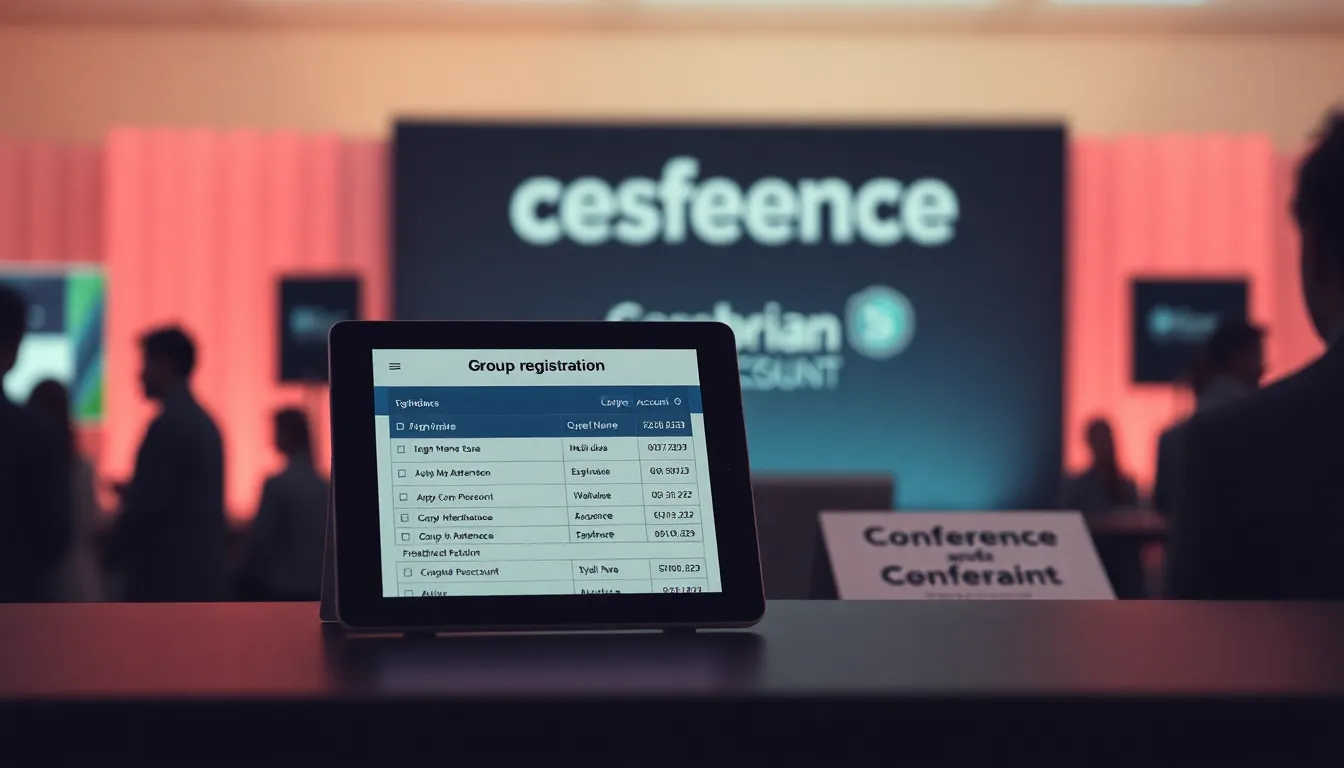
Corporate group ticketing transforms how organizations register teams for conferences, trade shows, and professional development events. When executed well, it removes friction from the registration process, increases participation rates, and provides clear visibility into attendance and ROI. For event organizers, group ticketing simplifies revenue forecasting, strengthens corporate relationships, and delivers a smoother experience from purchase to admission.
Among more than 380 surveyed event professionals in 2026, 74% identified engagement as a key success factor, while 39% cited engagement as one of their top challenges, according to EventsAir. That gap reflects a common reality: corporate attendees arrive through a variety of purchasing paths, yet many event platforms treat every registration as an isolated transaction. A well-designed group-ticketing workflow bridges that gap by aligning the purchase process with the way organizations actually buy, budget, and deploy their teams.
This guide walks through the practical steps to set up group ticketing for corporate attendees, from pricing and registration design through admission, engagement, and post-event measurement.
Define Group Ticket Pricing and Eligibility
Group ticketing begins with a clear pricing structure. Determine how many attendees constitute a group, what discount or flat rate applies, and whether pricing varies by ticket type or registration window. Common thresholds start at five or ten attendees, but the right number depends on your audience and average corporate delegation size.
Decide whether to offer tiered discounts that increase with volume, or a single group rate for any qualifying purchase. Tiered pricing rewards larger delegations and can drive incremental sales, while a single flat group rate simplifies communication and approval workflows inside corporate buyers' organizations.
If your event includes multiple access levels, such as full conference passes, expo-only tickets, or VIP upgrades, clarify whether the group discount applies to all ticket types or only to the base tier. Make eligibility rules explicit in your marketing materials so buyers can calculate their costs before starting the registration process.
In 2025, 57% of event organizers reported increased attendance, and 66% planned to host more events in the coming year, according to Bizzabo. Corporate groups represent a stable, repeatable revenue stream in that growth environment, and transparent pricing builds the trust required for multi-year partnerships.
Choose a Registration Workflow That Matches Corporate Buying
Corporate buyers typically follow one of two patterns: a single point of contact registers and pays for the entire team, or individual attendees register themselves after receiving an approval code or budget allocation. Your registration workflow should accommodate both.
Single-Purchaser Registration
In a single-purchaser model, one person completes the registration form, provides the names and email addresses of all attendees, and submits payment for the group. This workflow is familiar to corporate event coordinators and mirrors how organizations book hotel blocks and group travel.
The platform must collect each attendee's details during checkout, validate email formats, and send individual confirmation messages so every team member receives their own credentials. After payment, the system should generate separate admission records for each attendee, not a single group ticket that requires manual splitting at the door.
Self-Registration With Group Codes
Alternatively, organizations may prefer to distribute a group code or registration link that applies the discount automatically when individuals sign up. This approach reduces administrative overhead for the corporate buyer and gives attendees direct control over their profile details, session preferences, and dietary requirements.
The platform should track how many seats remain under each group code, prevent over-enrollment, and allow the original purchaser or a designated administrator to monitor who has registered. Automated reminder emails can prompt team members to complete registration before a deadline.
Event Passport PRO supports self-registration through configurable forms with ticket types, availability windows, quantity limits, and auto-enrollment. Organizers can set up group pricing at the Experience level and let corporate attendees register themselves with a shared code, while the platform tracks remaining capacity and sends notifications as seats are claimed.
Integrate Payment Processing and Invoicing
Corporate buyers often require invoices, purchase orders, or split payment options rather than immediate credit-card checkout. Build flexibility into your payment workflow to accommodate procurement policies.
If your platform supports Stripe or another payment gateway, enable immediate checkout for buyers who have spending authority. For organizations that require invoicing, provide a deferred-payment option that reserves the group's seats, generates a PDF invoice, and marks the registration as pending until payment is received.
Track payment status separately from admission eligibility. A corporate buyer who submits a purchase order should receive confirmation that the group is registered, even if the invoice remains outstanding. However, admission credentials should be withheld or clearly marked as provisional until payment clears, depending on your event's financial policies.
Set clear payment deadlines and communicate them in the initial confirmation email. Automated reminders two weeks and three days before the deadline reduce last-minute scrambles and improve cash flow predictability.
Prepare Admission for Group Arrivals
Corporate groups often arrive together, especially for morning keynotes or industry sessions. Your admission workflow must handle simultaneous check-ins without creating bottlenecks or confusion.
Assign each attendee a unique QR code or credential, even if they were registered as part of a group purchase. Individual credentials allow you to track who actually attended, support re-entry throughout the day, and provide accurate data for post-event ROI reporting.
Configure your admission system to recognize group affiliations so staff can quickly verify that a delegation is complete and identify any no-shows. If a corporate sponsor or VIP group arrives, the system should flag their status and trigger any special welcome protocols, such as escorting them to a reserved seating area or notifying the event director.
Enable duplicate detection and re-entry handling to prevent accidental double-scans when groups move between sessions or break areas. Offline scanning capability is essential for venues with unreliable Wi-Fi, especially during peak arrival windows when hundreds of attendees converge on the registration desk.
Build Networking and Engagement Into the Group Experience
Corporate attendees arrive with professional development goals, internal projects, and relationship-building objectives. Your event platform should support those goals from registration through the final session.
In 2026, 60% of respondents cited meetings as the dominant networking strategy, and average session participation exceeded 70%, according to RainFocus. Corporate groups value structured networking opportunities that connect them with peers, potential partners, and industry experts.
Meeting-based networking and strong session participation should be priorities in your group-attendee journey. Enable profile browsing, interest-based filtering, and meetup requests so corporate attendees can identify relevant contacts before the event opens. Provide agenda tools that let team members coordinate their schedules, RSVP to sessions, and compare notes on which breakouts to attend together.
A digital passport that rewards attendees for visiting sponsor booths, attending sessions, or connecting with peers adds a gamification layer that drives exploration and engagement. Leaderboards create friendly competition within corporate teams and provide a visible measure of participation that attendees can share with their managers after the event.
Track Attendance and Measure Group ROI
Corporate buyers need proof that their investment delivered value. Your platform should capture the data required to answer that question, including which sessions each attendee joined, how many connections they made, what sponsor offers they claimed, and how they rated the overall experience.
In 2026, 83% of surveyed event professionals still used attendance as a core metric, while 82% prioritized attendee feedback as an equally critical success measure, according to EventsAir. Attendance and attendee feedback are nearly equally important, supporting the case for post-event follow-up with corporate groups.
Export group-specific attendance reports that show each team member's session history, networking activity, and engagement score. Provide aggregated summaries that compare the group's participation rate against event averages, highlight top performers, and identify any attendees who registered but did not attend.
Send post-event surveys that ask corporate attendees to rate session quality, networking opportunities, and overall event value. Include open-text fields for qualitative feedback and questions that tie directly to professional development goals, such as whether the attendee learned strategies they can apply immediately or made connections that will support ongoing projects.
Share these reports with the corporate buyer within one week of the event. A clear, data-driven summary strengthens the relationship and builds the foundation for repeat attendance at future events. If the data shows strong engagement and positive feedback, it becomes a sales tool for renewing the group registration or expanding participation next year.
Automate Follow-Up and Renewal Communications
Group ticketing does not end when the event closes. Automated follow-up workflows keep corporate buyers engaged, deliver additional value, and set the stage for future registrations.
Send a thank-you email to the group administrator within 24 hours, summarizing attendance statistics, top sessions, and key takeaways. Include links to session recordings, speaker slides, or supplementary resources so attendees can review content and share it with colleagues who did not attend.
Two weeks after the event, send a renewal invitation that offers early-bird pricing for next year's conference. Reference the group's participation data and feedback scores to reinforce the value they received. If the organization sent ten attendees this year and nine participated actively, highlight that engagement rate and suggest expanding to fifteen next year.
For organizations that registered but showed low engagement, send a different message. Acknowledge the attendance gap, ask for feedback on what would improve the experience, and offer a complimentary consultation to discuss how future events can better align with their professional development goals. This outreach can uncover logistical issues, session-topic mismatches, or budget constraints that you can address in your next event design.
Track renewal rates by corporate account and use that metric to refine your group-ticketing strategy over time. If certain industries or company sizes consistently renew while others churn, adjust your pricing, session content, or marketing messaging to better serve your most loyal segments.
Scale Your Group Ticketing as Demand Grows
As your event program expands, group ticketing becomes a lever for sustainable growth. More than 92% of events analyzed had fewer than 100 participants in 2025, according to Lyyti, but corporate groups allow smaller events to deliver meaningful revenue while maintaining an intimate, high-engagement experience.
Monitor which organizations send repeat groups and identify patterns in their registration behavior. Do they register early or wait until the final week? Do they prefer invoice payment or immediate checkout? Do they send the same team members each year or rotate participants? Use these insights to tailor your outreach and offer concierge support to high-value accounts.
Consider creating a corporate membership tier that provides year-round benefits, such as discounted group rates across your entire event portfolio, priority access to speaker meet-and-greets, or exclusive pre-event networking sessions. Membership models turn one-time group purchases into recurring relationships and improve long-term revenue predictability.
If you manage multiple events per year, offer bundle pricing that rewards organizations for registering groups across your full calendar. A corporate buyer who commits to three conferences in advance receives a steeper discount and guaranteed availability, while you gain early revenue and better attendance forecasting.
Put Group Ticketing Into Action
Corporate group ticketing aligns your registration process with the way organizations actually buy, budget, and deploy their teams. By defining clear pricing tiers, offering flexible registration workflows, integrating robust payment options, and delivering measurable post-event ROI, you transform group sales from an administrative task into a strategic growth channel.
Ready to streamline group ticketing for your next event? Explore Event Passport PRO pricing to see how configurable registration, admission, and engagement tools support corporate attendees from sign-up through post-event follow-up.