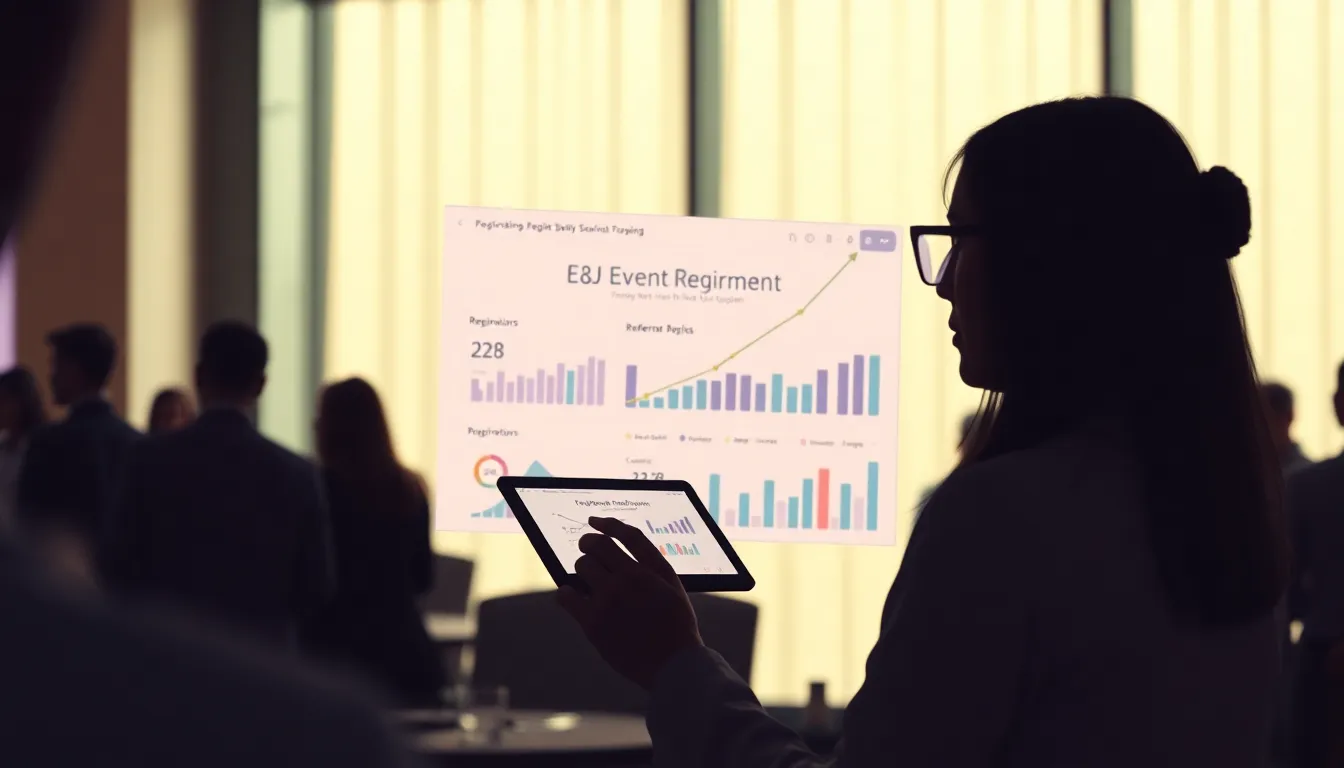
Referral programs leverage the most credible form of marketing: peer recommendation. When an existing attendee, sponsor, or industry partner invites colleagues to your event, the registration conversion rate climbs far higher than paid advertising or cold email. The challenge is designing a program that motivates advocates, tracks contributions accurately, rewards outcomes fairly, and integrates smoothly into your registration workflow.
According to Freeman's 2026 survey of 3,459 attendees and exhibitors, 84 percent decide to attend an event a month or more before registering. That extended decision window creates the perfect opportunity for referrals to influence registration behavior, but it also means your program must stay visible and easy to share throughout the entire pre-event period.
A successful referral program balances three elements: clear incentives that appeal to your specific audience, tracking technology that attributes each registration to the right advocate, and promotion channels that keep the program top of mind. This guide walks through every step of setup, from defining your goals to measuring return on investment.
Define Your Referral Program Goals and Audience
Before you choose incentives or technology, clarify what success looks like. Are you trying to reach a specific registration milestone, penetrate a new industry segment, or simply reduce customer acquisition cost? Each goal shapes the program design differently.
Next, identify who will refer. Attendee referral programs tap past participants who understand the value firsthand. Sponsor and exhibitor programs leverage commercial partners with large contact lists. Speaker and industry-association programs reach niche audiences with high trust. Many organizers run parallel tracks, each with tailored messaging and rewards.
Consider the decision-making profile of your target registrants. Corporate attendees often need manager approval and budget codes, so a referral offer must appeal both to the advocate and to the finance gatekeeper. Independent professionals may convert faster but have smaller networks. Understanding these dynamics helps you set realistic referral targets and choose rewards that close the deal.
Choose the Right Incentive Structure
Incentives fall into three broad categories: discounts for the referee, rewards for the referrer, and mutual benefits. The best structure depends on your event type, ticket price, and audience culture.
Discount-for-Referee Programs
Giving the new attendee a discount lowers the registration barrier and makes the advocate look generous. A typical setup offers ten to twenty percent off when someone uses a personal referral code. This model works well for higher-priced conferences where even a modest percentage discount represents meaningful savings.
The downside is that discounts erode revenue unless the incremental volume more than compensates. Track the net revenue impact carefully, comparing referred registrations against your baseline forecast and the discounted ticket price.
Reward-for-Referrer Programs
Rewarding the advocate with cash, gift cards, free event access, or exclusive perks shifts the incentive upstream. This model protects ticket revenue because new registrants pay full price, and it can motivate advocates who already plan to attend or who represent commercial partners.
Cash rewards scale with ticket price: a fifty-dollar reward may drive registrations for a thousand-dollar summit but will drain margins on a two-hundred-dollar workshop. Non-cash rewards such as VIP lounge access, speaker meet-and-greets, or premium swag often deliver perceived value that exceeds cost.
Mutual-Benefit Programs
Mutual-benefit structures give both parties a reward. For example, the referrer earns twenty-five dollars and the referee receives a fifteen percent discount. This approach maximizes motivation across the entire network but requires careful margin planning to ensure the combined incentive cost remains profitable.
Regardless of structure, cap the number of referrals per advocate if necessary to control costs, and define eligibility rules clearly. Specify whether staff, sponsors, speakers, or exhibitors can participate, and decide if referrals count only after payment or also from free registrations.
Select Referral Tracking Technology
Manual tracking with spreadsheets breaks down quickly as volume grows. Automated systems attribute each registration to the correct advocate, apply discounts or rewards instantly, and generate performance reports without human intervention.
Most event platforms offer built-in referral tools or integrate with dedicated referral marketing software. Key features to evaluate include unique referral code generation, automated discount application at checkout, real-time dashboards showing referral counts and revenue, and flexible reward fulfillment including email gift cards or account credits.
According to the 2026 State of Enterprise Events survey by InEvent of more than 2,000 event professionals across six industries, 72 percent considered AI valuable or essential in 2026, and 50 percent already used AI in event planning.
The gap between perceived value and current adoption signals that many teams recognize technology's potential but have not yet implemented tools that automate workflows like referral attribution. Choosing a platform with native referral tracking removes the integration burden and ensures data flows directly into your registration and ticketing system.
If your platform lacks referral features, third-party tools such as referral marketing software can generate unique links, track conversions via cookies or URL parameters, and send reward notifications. The trade-off is added complexity: you will need to match referral data with registration records manually or via API, and you will manage two separate dashboards.
Ensure the system can handle multiple referral tiers if you plan to reward advocates differently based on volume. For example, the first three referrals might earn twenty dollars each, while referrals four through ten earn thirty dollars. Tiered rewards encourage sustained effort and recognize your most active advocates.
Integrate Referrals Into Your Registration Workflow
A referral program only drives registrations if it is easy to discover, simple to use, and seamlessly integrated into checkout. Friction at any step reduces conversion.
Display the referral program prominently on your registration landing page. A dedicated section explaining how it works, what the reward is, and how to share a code reassures new visitors that they are receiving a fair offer. Use clear, benefit-focused copy: "Save fifteen percent when a colleague shares their code" performs better than generic "Referral program available."
After someone registers, present the referral offer immediately on the confirmation page and again in the confirmation email. Provide a personalized referral link and pre-written email or social-media copy that the advocate can send with one click. The easier you make sharing, the more advocates will act.
For paid events, confirm that discount codes apply correctly at checkout and display the adjusted total before payment. For free events, clarify whether the referral unlocks bonus content, priority access, or another non-price benefit.
Consider adding a referral dashboard to the attendee account area where advocates can see how many people used their code, track pending and paid rewards, and access fresh sharing assets as the event date approaches. Transparency builds trust and encourages continued promotion.
Promote the Referral Program Across Multiple Channels
Even the best-designed program will underperform if your audience does not know it exists. Promotion must be multi-channel, repeated, and tailored to each advocate segment.
Email Campaigns
Send a dedicated referral announcement email to past attendees, highlighting the reward and providing their unique code. Follow up with reminder emails at key milestones: early-bird deadline approaching, speaker lineup announced, or final week of registration. Segment your list so high-engagement past attendees receive more frequent prompts.
Social Media and Community Channels
Create shareable graphics that explain the referral offer in a single image, and post them regularly across LinkedIn, Twitter, Facebook, and Instagram. Tag past attendees and partners to seed sharing. If you operate a Slack community, dedicated forum, or LinkedIn group, pin a referral thread and encourage members to post their codes.
Freeman's 2026 survey found that 21 percent of attendees and 25 percent of exhibitors had used AI to find relevant events, demonstrating that audiences are adopting new discovery methods. While AI-driven search and recommendations are growing, peer referrals remain a trusted, human-centric channel that complements algorithmic discovery.
Partner and Sponsor Outreach
Sponsors and exhibitors often have large contact databases and a vested interest in driving attendance. Provide them with co-branded referral assets, custom tracking codes, and clear instructions on how to share. Offer bonus rewards for sponsors who drive a threshold number of registrations, turning them into active marketing partners.
On-Site Promotion for Multi-Year Events
If your event recurs annually, promote next year's referral program on-site. Print referral codes on badge inserts, display QR codes at high-traffic areas that link to the share page, and mention the program during closing remarks. Attendees who just experienced value are the most motivated advocates.
Measure Referral Program ROI and Optimize Performance
Tracking referral volume is the starting point, but true ROI measurement compares incremental revenue against the full cost of incentives, technology, and promotion.
Calculate total referred registrations, total revenue from those registrations, total cost of rewards paid or discounts given, platform or software fees, and the cost of promotional creative and email campaigns. Subtract costs from revenue to determine net incremental revenue. Divide by total costs to calculate return on investment as a percentage.
According to the 2026 State of Enterprise Events survey by InEvent, the share of event professionals struggling to demonstrate event ROI fell from 70 percent to 40 percent in one year.
This 30-percentage-point improvement reflects broader adoption of analytics and tracking tools that tie marketing spend directly to measurable outcomes. Applying the same discipline to referral programs means you can confidently justify the investment or identify underperforming elements to fix.
Beyond aggregate ROI, segment performance by advocate type, referral source, and time period. Identify which advocates drive the highest volume, which channels produce the best conversion rates, and when referrals peak. Use these insights to double down on what works and retire what does not.
A/B test incentive amounts, messaging, and creative assets. Try offering a higher reward for a limited time and measure whether the lift in referrals justifies the increased cost. Experiment with mutual benefits versus referrer-only rewards to see which resonates more with your audience.
Monitor fraud and abuse by flagging duplicate email addresses, suspicious registration patterns, or advocates who generate volume without corresponding engagement. Most platforms allow you to review and approve high-value rewards manually before fulfillment.
Leverage Technology That Tracks Engagement Beyond Registration
A referral program that stops at registration misses the opportunity to reward deeper engagement. Platforms that connect registration data with on-site activity can extend the referral model into the event itself.
For example, Event Passport PRO's registration system integrates with its gamification and analytics features, allowing organizers to see not only who registered through a referral code but also how actively those attendees participated. If referred attendees collect more stamps, attend more sessions, or claim more sponsor offers, that signals high-quality referrals worth rewarding at a premium tier.
Tracking post-registration engagement also helps you identify your most valuable advocates. An advocate whose referrals consistently show high engagement becomes a candidate for exclusive perks, early access to next year's program, or a formal ambassador role.
This level of insight requires a platform that unifies registration, admission, and engagement data in a single analytics dashboard. When referral attribution flows into the same system that tracks session attendance and sponsor interactions, you can measure true attendee lifetime value and optimize your referral incentives accordingly.
Turn Your Referral Program Into a Year-Round Growth Engine
Referral programs do not have to end when registration closes. Extend the model into post-event feedback, early-bird offers for the next edition, and community building between events.
After the event, ask attendees to refer colleagues who might benefit from the recordings, slides, or a discounted pass to the next event. Offer a small reward for successful referrals that convert into next year's early-bird tier. This keeps your event top of mind and builds a pipeline of warm leads months before the next registration launch.
For recurring events, consider a loyalty tier where multi-year attendees earn escalating referral rewards. A second-time attendee might earn standard rewards, while a five-year veteran earns double. This recognizes sustained advocacy and deepens the relationship with your most loyal community members.
Document what works and what does not after each event. Referral program performance data becomes a strategic asset that informs pricing, marketing spend allocation, and partnership strategy across your entire event portfolio.
Ready to build a referral program backed by integrated registration, engagement tracking, and real-time analytics? Explore Event Passport PRO's pricing to see how a unified platform simplifies referral attribution and turns every attendee into a potential advocate.