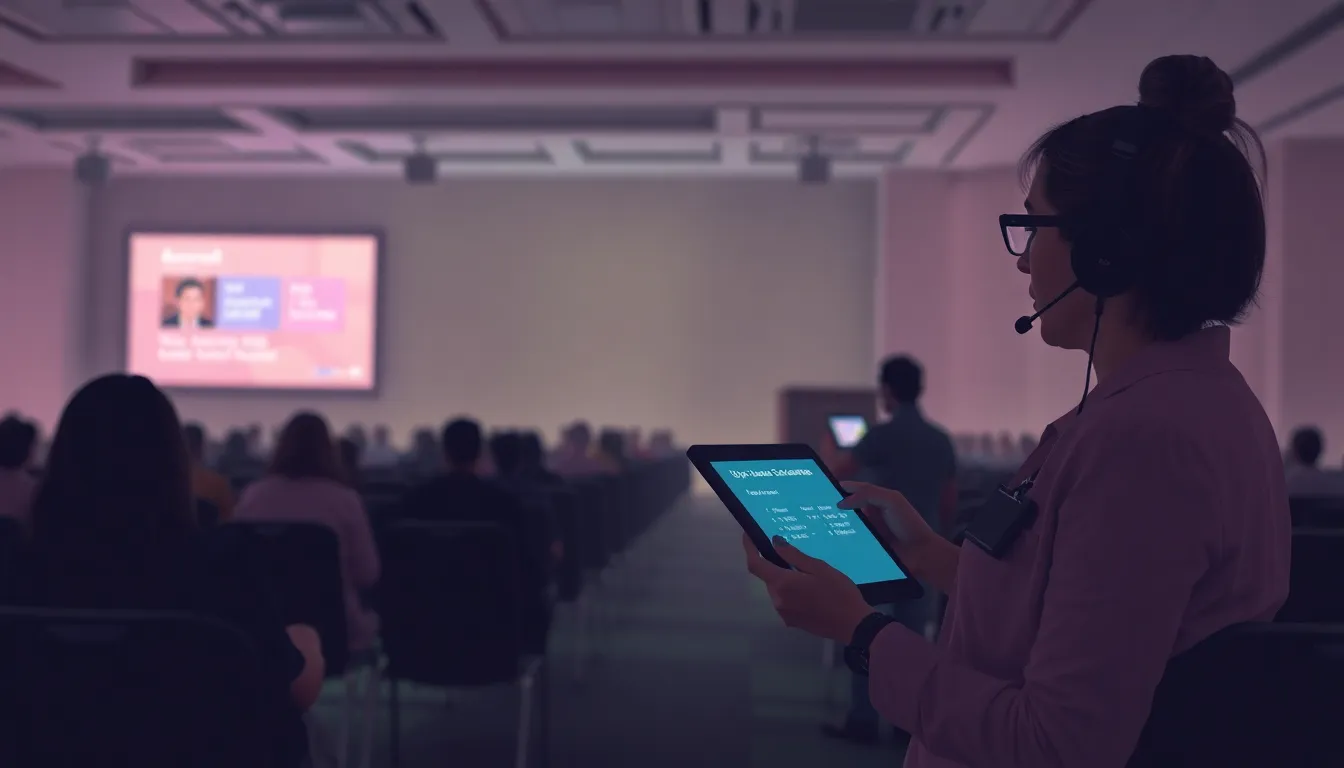
The moment between "next speaker ready" and "previous speaker exiting stage" is where event magic happens—or where chaos quietly derails your agenda. While attendees see only the polished transition on stage, behind the scenes your green room becomes mission control for speaker readiness, AV coordination, and schedule adherence.
In 2025, 89% of event organizers measured hybrid event success by attendee satisfaction, underscoring how critical backstage flow, speaker comfort, and smooth session handoffs are to overall event perception. And with hybrid event formats boosting attendee engagement by up to 80% and increasing overall attendance by up to 50% compared with traditional formats according to 2025 data, the operational complexity of coordinating backstage logistics has never been higher.
This comprehensive checklist walks you through the infrastructure, protocols, and technology integrations that transform your green room from a waiting area into a strategic operations hub.
Why Green Room Operations Matter More Than Ever
Speaker green room logistics have always been important, but today's event landscape—with its blend of in-person and virtual audiences, live streaming, real-time social engagement, and attendee expectations shaped by flawless digital experiences—has raised the stakes considerably.
Consider the financial implications: in 2025–2026, 48% of brands realized an ROI between 3:1 and 5:1 from events, with companies experiencing 10x ROI from attendees versus non-attendees. When your event delivers that kind of business impact, every missed cue, delayed handoff, or flustered speaker introduction chips away at the attendee experience that drives those returns.
The data shows that execution matters. According to 2026 event benchmarks, the average registered-to-attended ratio for in-person corporate events globally stands at 58%. Those who do show up have made a significant commitment of time and resources—they expect a professionally orchestrated experience, and that begins with session timing, speaker readiness, and seamless transitions.
Pre-Event: Building Your Green Room Infrastructure
Long before your first speaker arrives, the foundation for smooth handoffs is laid during planning and setup. Your green room infrastructure encompasses physical space, technology systems, staffing, and communication protocols.
Physical Space Design
Your green room should be located as close to the main stage or presentation rooms as possible, with a clear, direct path that minimizes speaker travel time and visibility to general attendees. Ideally, speakers should be able to move from green room to stage without navigating crowded hallways or exhibition floors.
- Comfortable seating arranged to allow private conversation prep and quiet focus areas
- Mirror and good lighting for last-minute appearance checks
- Refreshments (water, coffee, light snacks) that won't interfere with microphone audio
- Coat and bag storage to keep the space organized
- Restroom access without leaving the secure backstage area
- Charging stations for devices and presentation equipment
Technology and Communication Systems
In 2026, mobile event apps increased attendee engagement by up to 33%, and that same technology revolution applies backstage. Your green room should be equipped with real-time technology that connects speakers, AV teams, and stage managers.
- Digital display screens showing the live agenda, current session timing, and "on deck" speaker alerts
- Two-way communication devices (headsets or walkie-talkies) linking green room coordinators with stage managers and AV control
- Backup presentation equipment including laptops, adapters, clickers, and lavalier microphones
- Internet connectivity via hardwired ethernet and reliable WiFi for last-minute slide updates
- Testing station where speakers can preview their slides on the exact AV setup used on stage
Digital tools also enable you to push real-time schedule updates to speakers. If Session 3 is running five minutes long, your "on deck" speaker for Session 4 receives an instant notification rather than sitting nervously wondering whether to head to stage.
Staffing Your Green Room
Assign a dedicated green room coordinator—someone whose sole responsibility during event hours is speaker logistics. This person is not juggling registration issues, sponsor questions, or catering changes. Their focus is singular: ensure every speaker is informed, comfortable, equipped, and delivered to stage on time.
For larger events, consider adding a runner who can escort speakers, retrieve forgotten materials, or coordinate with AV teams, allowing your coordinator to maintain their post as the central information hub.
The 60-Minute Pre-Session Checklist
Smooth handoffs begin long before the outgoing speaker takes their final bow. For each session, implement a structured 60-minute countdown protocol.
60 Minutes Before: Speaker Check-In
- Confirm speaker arrival at the green room
- Verify presentation file is loaded and tested on the AV system
- Conduct microphone and audio check (lavalier placement, handheld technique, or podium mic preference)
- Review session timing: total slot, presentation length, Q&A duration, hard stop time
- Confirm any special requirements (audience polls, video playback, product demos, live coding)
- Provide water bottle labeled with speaker name
30 Minutes Before: Stage Familiarization
- Walk speaker to the stage entry point
- Show them where they'll enter, where to stand, monitor placement, and exit path
- Introduce them to the session moderator or MC if applicable
- Review the "5-minute warning" and "wrap-up" signal system
- Confirm pronunciation of their name and title for introduction
10 Minutes Before: Final Readiness
- Speaker returns to green room for final mental preparation
- Green room coordinator monitors the current session via live feed or audio relay
- Coordinate with stage manager on projected end time of current session
- Ensure speaker has microphone attached and tested
- Conduct final "anything you need?" check
2 Minutes Before: Positioning
- Escort speaker to stage-side position
- Confirm with stage manager that AV transition is ready
- Provide final confidence-building acknowledgment
- Stand by to facilitate immediate handoff when prior session concludes
The Handoff Moment: Coordinating the Transition
The actual transition between speakers is a choreographed sequence involving multiple team members. Here's the play-by-play for a professional handoff:
- Current speaker receives wrap-up signal from moderator or stage manager (typically a visual cue at the 5-minute and 1-minute marks)
- Speaker concludes remarks and receives applause
- MC or moderator thanks the speaker and provides brief transition remarks while speaker exits stage right (or designated exit)
- Green room coordinator or runner greets exiting speaker immediately off-stage, retrieves microphone if applicable, and escorts them back to green room or next obligation
- Simultaneously, incoming speaker enters from stage left (or opposite side) with microphone live
- AV operator switches presentation files during introduction (test this timing during rehearsal)
- MC completes introduction, new speaker begins, session continues without gap
The entire transition should take 60–90 seconds. Any longer and audience attention wanders; any shorter and it feels rushed. This timing is why your pre-positioning and communication systems matter so much.
Managing the Unexpected: Contingency Protocols
Even with perfect planning, events are live performances subject to variables beyond your control. Your green room operation needs documented contingency protocols for common scenarios.
Speaker Running Late or Missing
- Maintain contact information for every speaker (mobile, email, emergency contact)
- Establish "last call" check-in times (e.g., all morning speakers confirmed by 8:00 AM)
- Prepare a backup speaker or extended Q&A plan for each major session
- Have MC prepared with 5-minute "fill" content (audience engagement activity, sponsor acknowledgment, event app feature tour)
- Communicate any schedule adjustments immediately to subsequent speakers and session moderators
Technical Failures Mid-Session
- Equip green room with backup presentation files on multiple devices
- Train speakers on "tech-free" fallback: can they deliver core message without slides?
- Have AV team ready to swap microphones, projectors, or laptops within 60 seconds
- Prepare MC with graceful stall tactics that maintain audience engagement during troubleshooting
Session Running Long
This is the most common disruption. According to 2026 data, post-event surveys reach a 35% response rate when sent within 24 hours, and 50% of event planners use Net Promoter Score (NPS) to measure attendee satisfaction—both metrics that depend heavily on accurate session timing and whether the agenda promises made are kept.
- Empower your stage manager to enforce hard stops
- Use escalating visual signals (gentle yellow "5 min" to firm red "stop now")
- If a session must run over, immediately notify all downstream speakers and adjust the schedule in your event app
- Consider building 5–10 minute buffer slots into your agenda between major sessions
Technology Integration: Real-Time Coordination Tools
Modern event platforms offer features that streamline green room logistics and speaker coordination. When evaluating solutions, look for capabilities that support backstage operations, not just attendee-facing experiences.
A robust event engagement platform can power both your public-facing agenda and your behind-the-scenes coordination. For example, the same system that displays your full feature set to attendees—QR code check-ins, gamified challenges, live leaderboards—can also provide your green room coordinator with a real-time dashboard of session status, speaker check-in records, and schedule adherence metrics.
Features That Support Green Room Operations
- Drag-and-drop agenda builder with public embed and attendee-facing schedule views that automatically update when you make backstage adjustments
- Mobile notifications pushed to speaker devices when their session time approaches or schedule changes occur
- QR code badging to track speaker check-ins at the green room (same technology used for attendee gamification)
- Digital signage integrations that display live agenda updates on green room monitors
- Role-based access so speakers see only their session details while coordinators have full schedule visibility
When your green room coordination tools are integrated with your attendee engagement platform, you maintain a single source of truth. A schedule change made once propagates everywhere—speaker notifications, digital signage, mobile app, web embeds—eliminating the miscommunication that derails smooth handoffs.
Post-Session: Completing the Loop
Your green room coordinator's job doesn't end when a speaker exits the stage. The post-session process ensures speakers fulfill remaining obligations and provides you with operational data for future events.
Immediate Post-Session (0–15 Minutes)
- Greet speaker off-stage and retrieve any equipment (microphone, clicker, name badge)
- Direct them to their next obligation: book signing, media interview, networking reception, or departure
- Collect presentation file for post-event distribution if applicable
- Note any AV issues, timing problems, or special circumstances in your session log
Same-Day Debrief
- Conduct a brief operational review with your stage manager and AV lead after each major session block
- Identify what worked smoothly and what needs adjustment for the next block
- Update your handoff protocols in real-time if you discover a better approach
- Share timing data with subsequent speakers if schedule compression is necessary
Post-Event Analysis
- Review your session logs to identify patterns (which types of sessions consistently run long, which AV setups caused delays)
- Gather feedback from speakers about their green room experience
- Document lessons learned and update your master checklist for the next event
- Share operational metrics with your leadership team: on-time start percentage, average handoff duration, technical incident count
Remember that with hybrid formats now showing 40% higher attendance rates compared to in-person-only events according to 2025 data, your green room logistics now impact both in-person and virtual audiences simultaneously. A sloppy handoff doesn't just disrupt the room—it's broadcast to potentially hundreds or thousands of remote attendees.
Building Your Green Room Playbook
The most successful events don't wing their backstage operations—they document, rehearse, and refine a comprehensive green room playbook that can be handed to any coordinator and executed consistently.
Your playbook should include:
- Venue-specific maps showing green room location, stage access routes, and emergency exits
- Role descriptions and contact lists for every team member involved in speaker logistics
- Timing templates for different session formats (keynote, panel, workshop, lightning talk)
- Communication scripts for common scenarios (welcoming speakers, delivering time warnings, managing delays)
- Equipment checklists for green room setup and breakdown
- Contingency protocols for the most likely disruption scenarios
- Technology integration guides for your event platform, AV systems, and communication devices
This playbook becomes institutional knowledge that survives staff turnover and allows you to scale your event program without sacrificing operational quality.
Turn Backstage Excellence Into Attendee Satisfaction
Your attendees will never see your 60-minute speaker checklist, never witness the coordinated handoff choreography, and never review your green room playbook. But they will absolutely feel the difference between an event where sessions start on time, transitions are seamless, and speakers appear confident and prepared versus one where chaos quietly undermines the experience.
In an environment where event ROI is measured not just in attendance but in engagement, satisfaction, and downstream business impact, operational excellence is your competitive advantage. The green room is where that excellence is forged.
Ready to see how integrated event technology can support both your attendee engagement and your backstage operations? Try the interactive demo to explore how a unified platform handles everything from QR code check-ins and gamified challenges to agenda management and real-time updates—giving your team the tools to orchestrate flawless speaker handoffs while delivering an unforgettable attendee experience.